
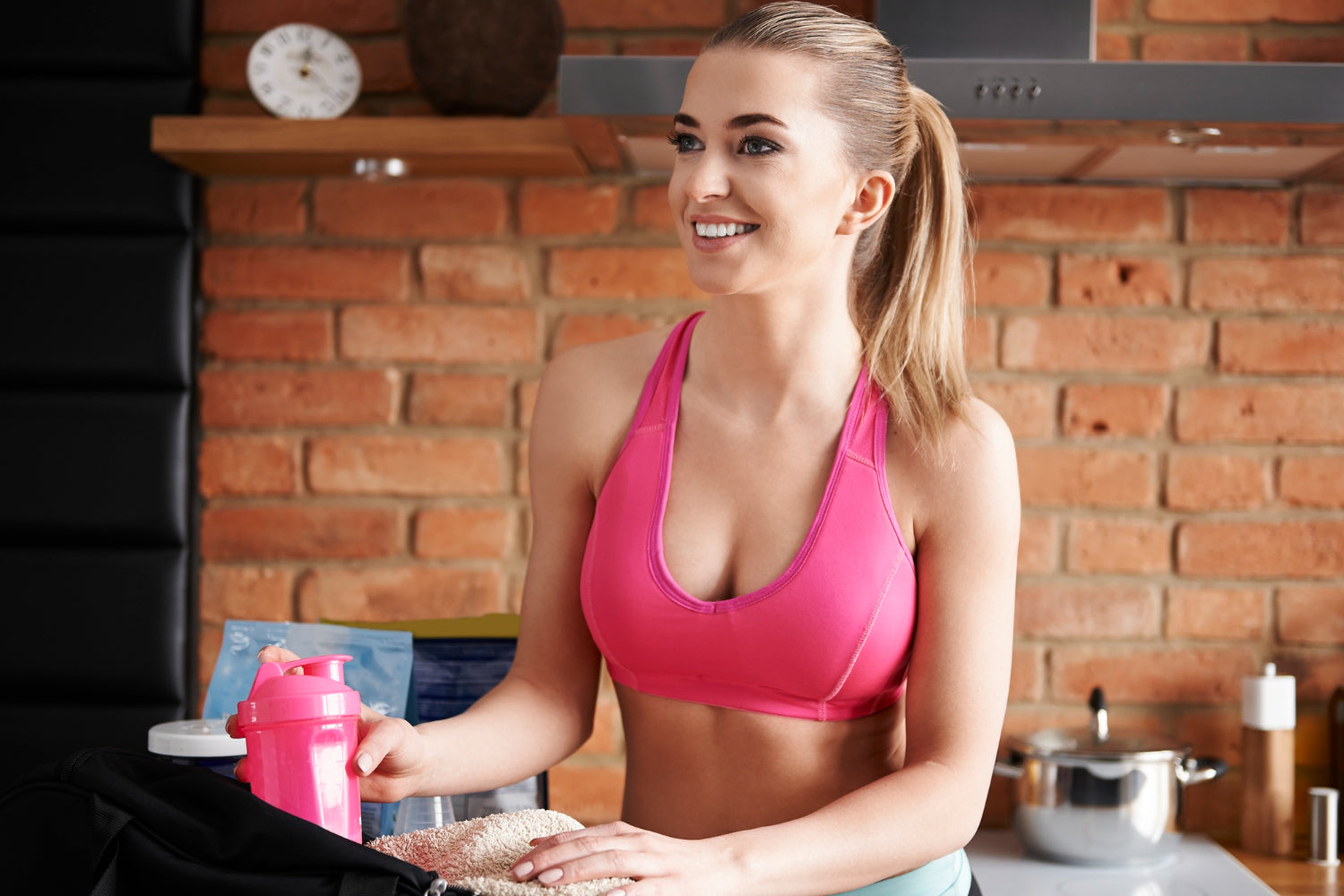


Creatine is the most studied sports supplement in history and, paradoxically, one of the most surrounded by myths when it comes to taking it as a woman. Most of the sector's marketing is aimed to men, which has generated a wrong image in many women: that it will make them “too defined,” that it retains water like a sponge, that alters the menstrual cycle or that it only serves to to gain volume.
Let's clarify it with numbers and honesty. Creatine works en mujeres exactamente igual que en hombres, con algunos specific benefits that are even more relevant in women: bone health, cognitive function, prevention of muscle loss in menopause, better recovery between workouts. If after reading this you still having doubts, at least you will have data instead of fears inherited.
| Appearance | What you need to know |
|---|---|
| Does it work the same as in men? | Yes. Same effects on strength, recovery, and muscle mass |
| Will I get too defined? | Impossible. Female testosterone does not allow hypertrophy male |
| Do I retain water? | Yes, 1-2 kg intramuscular in the first 4 weeks. It is not fat nor edema |
| Recommended dose | 3-5 g/day, same as in men |
| Recommended type | Pure monohydrate at 99.9%, same as in men |
| Best time in the cycle | It doesn’t matter. It works throughout the cycle |
| Pregnancy and breastfeeding | Limited evidence. Consult a gynecologist |
Mythometer: what do you know about creatine in women?
7 statements · mark true or false · we tell you the result
Does creatine in women as in men?
Yes. Creatine acts on the same biochemical mechanism regardless of sex: it increases phosphocreatine stores in the muscle, which allows faster ATP regeneration (the currency of cellular energy). This translates into more strength per set, more training volume, better recovery between sets and, in the medium long term, more muscle mass as a response to training.
Comparative studies show similar effects in both sexes. The most relevant difference is quantitative, not qualitative: women have basal muscle creatine stores slightly lower than men (especially if the diet is low in red meat, the main source of dietary creatine). That means many women respond even better to supplementation because they start from lower levels.
If you want to understand the biochemical mechanism in detail, it is covered en para qué sirve creatine. Here the focus is on what is specific for women.
Benefits of creatine for women
More strength and training performance
The main and most supported benefit. Supplementation with 3-5 g of creatine monohydrate for 4-12 weeks improves performance in high-intensity, short-duration exercises: squats, weight deadlift, sprints, jumps. Studies in trained women show improvements of 5-15% in maximum strength and 10-20% in repetitions effective in strength sets.
Translated into practice: if you do 8 repetitions of squat with 60 kg, with creatine you probably get 9-10 with the same technique. That difference, sustained over months of training, is what generates real progress in body composition.
Composition body: toning, not “male volume”
Aquí está el malentendido más extendido. La creatina no causes male muscle hypertrophy in women. The reason is biochemistry: exaggerated male hypertrophy depends on high levels testosterone, which women have 10-15 times lower. Without testosterone, no male pattern.
What does happen with creatine + strength training:
- Increase in lean mass (2-3 kg in 6 months, depending on protocol)
- Concurrent fat loss if training well and eating properly
- Better muscle “definition”: the muscle looks firmer and worked, not bigger
- Increase in functional strength without drastic volume increase
The image that appears on YouTube of women with bodybuilder-like muscles bodybuilder is not the result of creatine. It is the result of years of extreme training, strict diets, and in many cases, anabolics. A normal woman training 3-5 times a week with creatina obtiene un cuerpo tonificado, no un cuerpo masculinized. That is physically impossible without hormonal help external.
Bone health: the undervalued benefit for women
Women's bone density begins to progressively decrease from 30-35 years, and accelerates in perimenopause and menopause due to estrogen drop. This increases the risk of osteoporosis and fractures at starting from 50-60.
Creatine has documented effects on bone:
- In studies with postmenopausal women, the combination of creatine + strength training showed improvements in mineral density bone compared to training alone
- Reduces bone resorption markers
- Increases periarticular muscle strength, which improves stability and reduces the risk of falls
For a woman over 40, creatine is not just a supplement “deportivo”. Es una herramienta preventiva contra la pérdida bone and sarcopenia.
Cognitive function and mental performance
One of the lesser-known benefits. The brain consumes 20% of body ATP and, in situations of cognitive stress or deprivation of sleep, brain phosphocreatine stores are depleted more fast.
Studies in women showed that creatine supplementation improvement:
- Working memory and sustained attention in sleep deprivation situations of sleep
- Processing speed under stress
- Mood in women with mild to moderate depression (effect adjunct along with standard treatment)
This is relevant for women during exam periods, candidates, professionals with high sustained cognitive load, recent mothers with fragmented sleep.
Mental health and mood mood
The most recent evidence points to creatine possibly having a adjunct role in major depression, especially in women. In a randomized study, women with major depression who received 5 g of creatine/day in addition to standard antidepressant treatment showed faster and deeper improvement than the control group.
Does not replace medical treatment. But it can be one more piece in comprehensive management if your psychiatrist is aware.
Postpartum recovery
Loss of strength and muscle mass during pregnancy and the first months of breastfeeding is real. Although the evidence on creatine specifically in postpartum is scarce, the recovery of lean mass that creatine facilitates can speed up the return to physical condition prior. Always with the green light from your gynecologist if you are breastfeeding.

The 5 most common fears about creatine in women (with data)
1. “I’m going to get defined too much and look like a man”
Not possible. Women have between 0.2 and 0.8 ng/ml of testosterone. Men, between 3 and 10 ng/ml. Hypertrophy marked masculine requires levels that the female body does not produces.
A normal woman training with creatine increases lean mass in a proportional and harmonious: firmer arms, more defined glutes, stronger back. Not “widening like a man.” That only happens with external hormonal supplementation or anabolic steroids.
2. “I’m going to retain liquids like a sponge”
La creatina sí provoca retención hídrica, pero es retención INTRAMUSCULAR, not subcutaneous. That means the water enters inside the muscle fiber, not under the skin. Visually, that is translates into fuller, firmer muscle, not a swollen, soft, or edematous.
La cifra típica: 1-2 kg de aumento de peso en las primeras 4 semanas, maintained afterwards. It is not water that accumulates in the face, hands or ankles. It is water inside the muscle.
3. “The scale is going to going up and I’m going to get discouraged”
Probable: 1-2 kg en el primer mes. Pero medir progreso por la scale with creatine is a mistake. The scale does not distinguish between 2 kg of intramuscular water (positive) and 2 kg of fat (negative).
Best indicators: - How your clothes fit (especially waist, arms, glutes) - How you look in the mirror after 4-8 weeks - Your strength in the gym (the weights you lift) - Measurements with tape (waist, hips, thigh, arm)
If the scale goes up and the waist goes down, you are heading in the right direction correct. If the scale goes up just for going up, it’s not creatine — it’s the caloric balance.
4. “It will make me gain weight fat”
No. Creatine does not provide calories. A 300 g container provides 0 kcal — all pure creatine is nitrogen and water that the body metabolizes without going through the energy pathway. There is no way it causes weight gain fat.
What does happen is that, with more strength and better recovery, you will probably train better, which increases energy expenditure total caloric intake and, paradoxically, facilitates fat loss if the diet accompanies.
5. “It will alter my cycle menstrual”
There is no evidence of cycle alteration by creatine at doses normal (3-5 g/day). The menstrual cycle is regulated by estrogen and progesterone, hormones with which creatine does not interact directly. Studies in women with prolonged use (1-5 years) have not shown no significant hormonal alteration.
What can happen: if you combine creatine with very intense training and intense and strong caloric deficit, you may experience amenorrhea hypothalamic — but that is due to deficit and load, not because of creatine.
Creatine and menstrual cycle
Hormonal fluctuation of the cycle affects sports performance. The creatine can be used to cushion some of these effects.
Follicular phase (days 1-14, approximately)
After menstruation, estrogen levels increase progressively. It is the phase of greatest anaerobic capacity and best rendimiento en fuerza máxima. La creatina potencia esta fase because the body is prepared for efforts intense.
Luteal phase (days 15-28)
Increase in progesterone and estrogen before menstruation. In for many women, this phase is associated with:
- Premenstrual symptom (PMS): irritability, fatigue, bloating
- Greater sensitivity to effort
- Sometimes, decreased performance
Studies on creatine in the luteal phase suggest that supplementation reduces fatigue and improves performance in women with marked PMS. It is not a treatment for PMS, but it is an adjunct reasonable along with good nutrition and rest.
Hormonal contraceptives
If you take the pill, the patch, the vaginal ring, or have an IUD hormonal, hormone levels are different from those of a cycle natural. The evidence on how contraceptives affect response to creatine is limited, but available studies do not show significant difference: creatine works the same.
Creatine in perimenopause and menopause
For women from 45-50 years old, creatine stops being a “sports” supplement and becomes a preventive tool with several goals at once:
Slow down the loss of lean mass (sarcopenia)
From age 30, a woman loses approximately 0.5-1% of muscle mass per year if not training. That loss accelerates with the drop of estrogen in perimenopause and menopause. Creatine + strength training is the combination most supported by evidence to slow and reverse that loss.
Maintain bone density
As mentioned before, the creatine + strength combination has documented bone effects. For a postmenopausal woman with osteopenia, this effect is clinically relevant.
Improve fatigue and mood
Chronic fatigue is a very common complaint in perimenopause. The creatine, by improving cellular energy and cognitive function, can help reduce that feeling of mental and physical fatigue maintained.
Dose and duration
3-5 g/day, indefinitely. No need to cycle. No need to stop. The creatine monohydrate is safe long-term in healthy people, according to studies with up to 5 years of follow-up.
Creatine, pregnancy and breastfeeding
Clinical evidence on creatine in pregnancy and breastfeeding is limited. Human studies are scarce for ethical reasons. The little available evidence suggests:
- Creatine crosses the placenta and appears in breast milk in small amounts
- No adverse effects have been documented at normal doses (3-5 g/day) in the few available studies
- Creatine may have a protective role in obstetric complications (fetal hypoxia), although this is research recent without widespread clinical recommendation
The practical rule: in the absence of robust evidence, the most reasonable is to consult with the gynecologist before to continue taking it during pregnancy or breastfeeding. There is no alarm, but no clear recommendation either — it is an individualized decision.
How to take creatine as a woman
The guideline is identical to that of men. There is no real “for women” versions — they are marketing.
Dose
3-5 g per day. Some women with low body weight (50-55 kg) can start with 3 g; larger women (70+ kg) can increase to 5 g. There is no proven benefit in exceeding 5 g/day.
Type
Pure monohydrate at 99.9%. No the “premium female” with flavor, added vitamins, BCAAs, and blends that cost double. Creatine is creatine. If your goal is the best quality sin pagar por marketing, los criterios para elegir están en mejor creatina del market.
When
Once a day, regardless. Morning, noon, night, before or after training — consistency matters more than timing. If you train, taking it with your post-workout shake is the most convenient. If not, with any meal.
Do you need a loading phase
No. The loading phase (20 g/day for 5 days) speeds up saturation to 7 days, but it also increases initial water retention. For mujeres que prefieren evitar ese aumento brusco de peso, es better to skip the loading phase: 5 g/day for 3-4 weeks gradually saturate the stores, without a “peak” retention.
Combine it with what
Just like in men: with whey protein post-workout is the most efficient. The combination is supported by evidence and is the basis of entrenamiento de fuerza con suplementación. En creatina y proteína: cómo combine them the detailed guideline is available.
Who benefits more from taking creatine as a woman
Five profiles where the risk-benefit balance is clearly positive:
- Woman who trains strength 3+ times a week and wants to optimize progress
- Woman 40+ concerned about body composition or loss of strength
- Woman in perimenopause or menopause
- Vegetarian or vegan woman (starting from lower levels due to less meat consumption)
- Woman with a busy diet or high cognitive load job maintained
And two profiles where it is advisable to check first:
- Woman with preexisting kidney problem (consult your nephrologist)
- Pregnant or breastfeeding woman (consult your gynecologist)
Frequently asked questions
Muscle stores saturate in 3-4 weeks with doses of 5 g/day. Effects on strength and performance are noticed from 2-4 weeks. Visible changes in body composition start from 6-8 weeks of constant use combined with training.
No. Creatine retention is intramuscular, not subcutaneous. It does not affect the face, hands, or ankles. If you notice swelling in those areas, it’s not creatine — it’s fluid retention due to other causes (dietary sodium, hormones, heat).
Yes. Although the maximum benefit is obtained by combining it with training, the effects on cognitive function, bone, and health status mood are also observed in sedentary people. The dose and type are the same.
No. The “for women” versions on the market are the same creatines with a pink label, fruity flavors, and a higher price. Creatine monohydrate is chemically identical for men and women. Paying more due to female marketing, that's exactly what it is.
It should not be stopped in periods. Creatine monohydrate is safe to long term in healthy people (studies up to 5 years without effects adverse). If you decide to stop, deposits return in 4-6 weeks baseline levels and you will notice slightly less strength, but nothing drastic.
No. Creatine and hormonal contraceptives do not interact pharmacologically. You can take both without problem.
Not directly. Creatine does not affect hormone levels. If you notice flare-ups when starting, check other factors: increased protein, diet changes. diet, stress. If it persists, try changing the brand to one with published analyses (no traces of hormones or steroids).
Creatine monohydrate + magnesium malate is a combination that some fibromyalgia patients report it useful for muscle fatigue. Clinical evidence is limited, but the risk is low. Consult with your rheumatologist before adding it.
Vegan and vegetarian women have lower baseline levels of muscle creatine because most is obtained from meat and pescado. La suplementación tiene un efecto incluso mayor en este perfil, because the difference between low and normal levels is notable. The dose does not change: 3-5 g/day.
Final recommendation
If you train strength, are a woman 25-50 years old and want to optimize strength, recovery and body composition: start with creatine monohydrate 5 g/day without a loading phase. Consistency 8-12 weeks. Measure progress with tape and strength, not just on the scale.
If you are 45+ years old and concerned about muscle mass loss or bone health: the creatine + strength training combination is the tool with the most evidence support. The most useful investment you you can do for your health at that age.
If you are hesitating between brands, the filter is the same as for cualquiera: monohidrato puro al 99,9%, 200 Mesh, sin aditivos, origen rastreable, registro sanitario. La creatina Wellbeinn monohydrate meets the five criteria: 99.9% pure, ultra-micronized 200 Mesh, single ingredient, made in Spain with RGSEAA. 100 servings for €18.90.
And if you have doubts about how to take it, when, with what combinarla y los detalles del protocolo paso a paso, está todo en cómo tomar la creatina. Para entender el mecanismo bioquímico desde cero, en para qué sirve la creatine is the foundation.
Artículo redactado por...
Jorge Albert Mallabrera
Redactor especializado en fitness, recuperación muscular y bienestar.
Miguel Artín
CEO en Welbeinn · Especialista en terapias de recuperación.
Caetano
Equipo Welbeinn · Producto y protocolos de uso.
Share:
Lymphatic Drainage: What It Is, Real Benefits, and When It's Worth It