
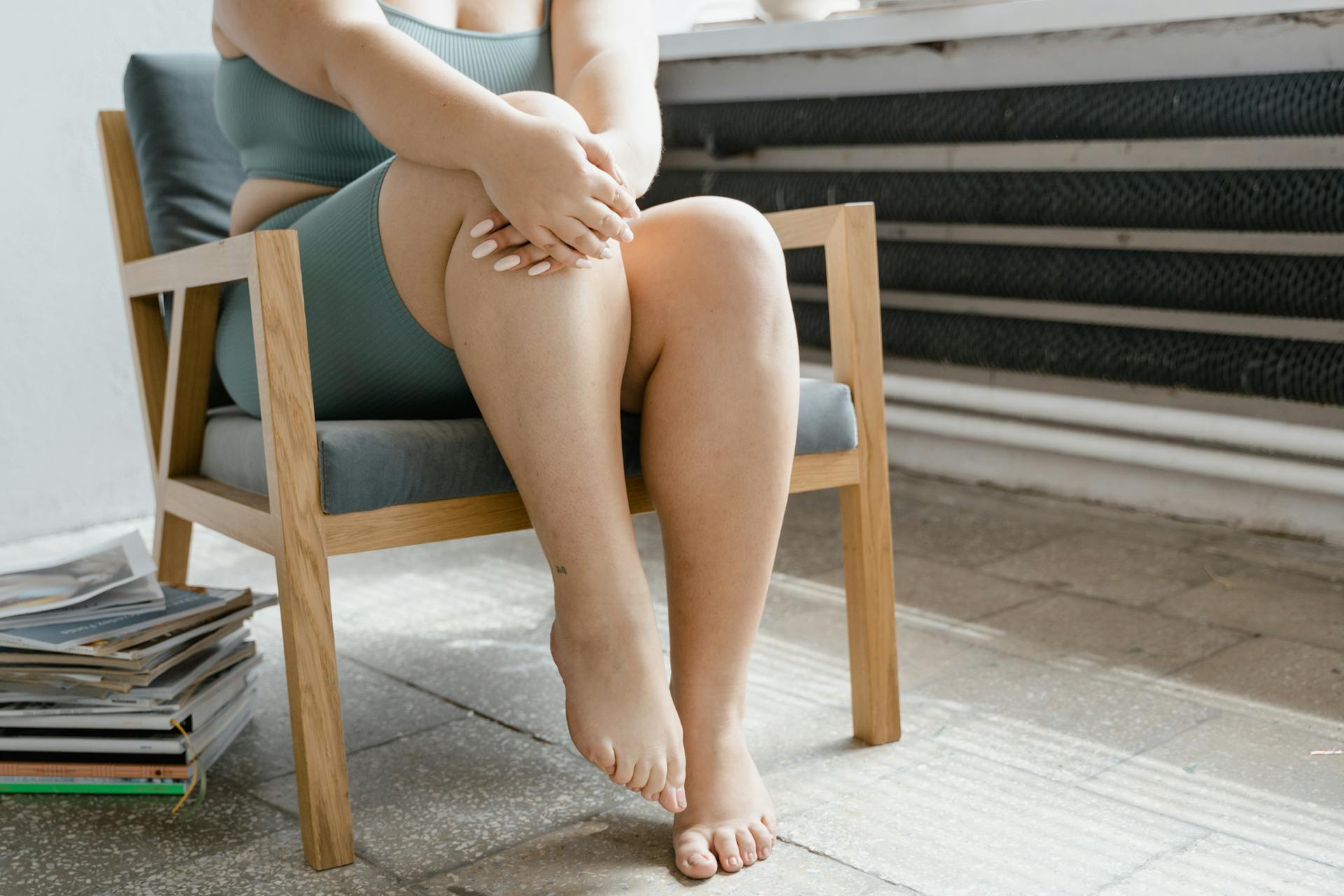


If you’ve been going to the doctor for years with swollen, painful legs, trying diets that don’t work, and feeling guilty for not losing weight where it matters most, what you have may not be a problem of willpower. It may be lipedema.
Lipedema is one of the most common and most ignored conditions in medical practice. It is estimated to affect 1 in 10 women, yet many of them take years—sometimes decades—to receive a correct diagnosis. This article is written for you: so you can recognize the symptoms, understand why your body behaves the way it does, and know what options you have.
| Characteristic | Details |
|---|---|
| What it is | Chronic adipose tissue disorder with abnormal fat distribution |
| Who it affects | Almost exclusively women |
| Prevalence | Up to 1 in 10 women |
| Affected areas | Legs, thighs, hips, and sometimes arms. Never hands or feet |
| Key symptom | Pain when touching the fat, not the muscle |
| Main cause | Genetics + hormonal changes |
| Responds to diet | No. Lipedema fat is resistant to calorie deficit |
| Basic treatment | Compression, lymphatic drainage, aquatic exercise |
What lipedema is (and why it’s not what you’ve been told)
Lipedema is a chronic disorder of adipose tissue that causes an abnormal and disproportionate accumulation of fat in certain areas of the body, mainly legs, thighs, and hips, and in some cases also the arms. The distribution is always symmetrical: both legs at the same time, with the same shape, with the same pain.
What makes lipedema different from ordinary obesity is not just where the fat accumulates. It’s how that fat is built.
Lipedema fat is structurally different from normal fat. It is fibrotic, infiltrated by altered connective tissue, and resistant to calorie deficit. This explains something many women with lipedema have experienced firsthand: you can go on a strict diet, lose weight in your face, abdomen, and arms, yet your legs remain exactly the same. It’s not a lack of effort. It’s biology.
The Consensus Document on lipedema prepared by specialists in vascular medicine and lymphology in Spain explicitly recognizes that this condition is frequently underdiagnosed. And the reason is simple: for decades, women with lipedema have been given the same advice: "exercise more and eat less." When that doesn’t work, the medical conclusion is usually "you’re not trying hard enough," instead of considering that maybe the problem has another name.
This situation has a huge cost. Not only physical, but emotional. Many women with lipedema receive their diagnosis after years of feeling guilty, misunderstood, and like failures. The validation that comes from hearing "this has a name and it’s not your fault" is, in itself, part of the therapeutic process.
From a clinical perspective, lipedema is characterized by an alteration in the microcirculation of adipose tissue. The lymphatic capillaries are more fragile than normal, which facilitates the appearance of bruises with minimal impact or even without apparent trauma. Over time, if untreated, the accumulation of interstitial fluid can compromise the lymphatic system and lead to what is known as lipo-lymphedema.
The Spanish National Health System currently does not cover compression garments for lipedema due to "lack of sufficient evidence." This reality leaves many patients without access to one of the most effective conservative treatments.
Lipedema vs cellulite vs obesity vs lymphedema
One of the biggest obstacles to correct diagnosis is the confusion between lipedema and other conditions that may look similar at first glance. Here is the real difference.
Lipedema vs cellulite
| Characteristic | Lipedema | Cellulite |
|---|---|---|
| Distribution | Symmetrical, bilateral | Variable, irregular |
| Pain to the touch | Yes, characteristic | Not usual |
| Responds to diet | No | Partially |
| Nodules | Palpable under the skin | Superficial "orange peel" effect |
| Who it affects | Almost exclusively women | More than 80% of adult women |
Lipedema vs obesity
| Characteristic | Lipedema | Obesity |
|---|---|---|
| Distribution | Disproportionate (legs vs torso) | Global and proportional |
| Loses with diet | No, in affected areas | Yes, all over the body |
| Pain to the touch | Yes | Not usually |
| Bruising | Frequent | Not related |
| BMI | Can be normal or elevated | Elevated by definition |
Lipedema vs lymphedema
| Characteristic | Lipedema | Lymphedema |
|---|---|---|
| Symmetry | Always bilateral | Generally unilateral |
| Affects feet | No (cuff sign) | Yes, frequently |
| Stemmer sign | Negative | Positive |
| Cause | Hormonal/genetic | Lymphatic damage |
| Pain | Tenderness in the fat | Heaviness, tension |
The "Stemmer sign" is a simple clinical test: if you pinch the skin on the top of the foot and can lift a fold, the result is negative, suggesting there is no lymphedema. If the skin is so thickened that you cannot lift it, the result is positive.
Symptoms of lipedema: beyond "fat legs"
The most visible symptom of lipedema is the disproportionate accumulation of fat in the legs. But stopping there is only seeing half the picture, and it is precisely this simplification that leads to so many years of underdiagnosis.
Pain is the most confusing symptom. The fat in lipedema hurts to the touch. Not the muscle, not the bone: the fat itself. You can press lightly on the inner thigh or the knee area and feel pain disproportionate to the stimulus. This does not happen with normal fat, common obesity, or cellulite.
The feeling of heaviness is constant in most cases, especially at the end of the day or after prolonged periods of standing or sitting. Many women describe their legs as “like lead,” a sensation that goes beyond normal fatigue and does not completely disappear with rest.
Bruises appear easily, sometimes without an identifiable bump. The capillary fragility that accompanies lipedema causes the skin to react excessively to minimal pressure.
Swelling fluctuates throughout the day and worsens with heat, intense impact exercise, and menstruation. Unlike pure lymphedema, lipedema swelling usually does not leave a pit—meaning if you press with your finger, the skin does not stay indented for seconds.
But there is another symptom that medical articles almost never mention: the emotional impact.
Living with a body that doesn’t respond to your efforts, that hurts for no apparent reason, that draws stares at the pool or unwanted comments, has a real psychological cost. Anxiety, depression, and guilt are frequent companions of undiagnosed lipedema. “I know I should eat better,” “it’s just that I don’t move enough”… Those internal voices—often reinforced by well-meaning but uninformed healthcare professionals—are part of the clinical picture, even if they don’t appear in any manual.
The moment of the correct diagnosis is usually experienced with a mix of relief and anger. Relief because it finally has a name. Anger because no one said it before.
Causes of lipedema: what we know and what we don’t
The exact cause of lipedema is not fully established, but the available data clearly point to two main factors: genetics and hormones.
Genetics: lipedema has a strong familial component. It is not uncommon for a diagnosed woman to start recognizing the same symptoms in her mother, grandmother, sister, or aunt. It is estimated that between 60% and 70% of cases have a family history, although the condition is probably underdiagnosed in previous generations.
Hormones: lipedema characteristically appears or worsens during periods of intense hormonal change: puberty, pregnancy, postpartum, and menopause are the most common triggers. This connection with estrogens is one of the reasons why lipedema affects almost exclusively women.
What we still don’t know: research on lipedema is decades behind other conditions with similar prevalence. There are still fundamental unanswered questions: why some women with a genetic predisposition develop the condition and others do not, the exact role of the lymphatic system from early stages, or whether there is a relevant autoimmune component.
The 4 stages of lipedema: identify which one you are in
Lipedema is not a static condition. It progresses over time, especially if untreated, and this progression is described in four stages.
| Stage | Skin appearance | Impact |
|---|---|---|
| 1 | Smooth on the outside, nodules only palpable | Minimal. Tenderness, heaviness |
| 2 | Irregular, "mattress-like" appearance, visible nodules | Moderate. Frequent pain, evening swelling |
| 3 | Thickened, large deforming masses | Important. May limit mobility |
| 4 (lipo-lymphedema) | Highly altered, permanent swelling | Severe. Combination with lymphedema |
Stage 1: from the outside, the legs may simply look "a bit bigger." The skin appears smooth. However, when palpating the inner thigh or around the knee, small nodules can be felt under the skin, like pellets or tiny beads. Many women in stage 1 have gone years without diagnosis because "nothing looks unusual."
Stage 2: the skin begins to show an irregular texture, with depressions and elevations deeper than superficial cellulite. Nodules are now the size of a walnut and visible. Swelling at the end of the day is more pronounced.
Stage 3: the adipose tissue is very thickened and deformed. Large fat masses appear, especially on the inner knees, "culotte" area, and ankles. Mobility may be limited.
Stage 4 (lipo-lymphedema): when advanced lipedema damages the lymphatic vessels due to prolonged compression, a lymphedema component is added. The tissue hardens, the swelling becomes permanent and no longer subsides overnight. It requires combined specialized care.
How to know if you have lipedema: step-by-step self-diagnosis
There is no laboratory test that diagnoses lipedema. The diagnosis is clinical. But there are specific signs you can assess yourself before going to a consultation.
1. Check for symmetry: lipedema is always bilateral and symmetrical. Both legs are affected at the same time, with the same shape. If one leg is clearly thicker than the other, the causes are different.
2. Look for the cuff sign: observe your ankles. In lipedema, the fat stops abruptly just before the ankle and foot, creating a "step" between the thickened leg and a normally sized foot. The foot and hand are never affected in pure lipedema.
3. Press and listen to your pain: gently press the inner thigh. In a person without lipedema, this pressure does not hurt. In a person with lipedema, the pain is intense and disproportionate to the stimulus.
4. Do the Stemmer test: try to pinch and lift a fold of skin on the top of your foot. If you can do it, the sign is negative (no lymphedema). If you cannot, specialized evaluation is warranted.
5. Review your hormonal history: Did the changes start at puberty, during pregnancy, or with menopause?
6. Ask about your family history: Do your mother, grandmother, or sister have disproportionately large legs compared to their torso?
7. Evaluate the response to diet: Did you lose weight in your face and belly but your legs remain the same? This is a very characteristic sign.
If you answer yes to three or more of these points, it is worth seeking evaluation by a doctor experienced in lipedema.
Lipedema treatment: what works and what doesn’t
Lipedema has no cure. But it does have treatment, and that treatment can significantly improve quality of life. What DOES NOT work is just as important as what does: a strict low-calorie diet does not reduce lipedema fat, and high-impact exercise can worsen the pain.
Pressotherapy and pneumatic compression
Pressotherapy is one of the most supported conservative treatments for managing lipedema. It works by applying sequential pressure from the foot to the hip, stimulating venous and lymphatic return and reducing edema.
Studies published on PubMed show that advanced pneumatic compression achieves significant reductions in leg volume and fluid accumulation. A combined program of anti-inflammatory diet, decongestive physiotherapy, and pressotherapy has demonstrated significant reductions in both body mass index and limb volume.
Clinical guidelines include compression as part of the basic conservative treatment. In the context of home use, home pressotherapy devices allow you to maintain the necessary treatment frequency without relying exclusively on physiotherapist appointments.
If you want to understand in depth how pressotherapy works, we have a complete article about what pressotherapy is and what it is for.
Exercise: why water is your ally
Aquatic exercise holds a special place in lipedema. When you immerse yourself in water, hydrostatic pressure acts uniformly and progressively over the entire body, mimicking the effect of a compression garment. The result is that it activates lymphatic circulation, reduces edema, and allows movement without pain.
Walking in a pool, doing aquagym, or simply swimming are activities that most women with lipedema tolerate well, even in advanced stages. Other recommended exercises: low-resistance stationary cycling, yoga, and gentle stretching.
Anti-inflammatory nutrition
Although diet does not eliminate lipedema fat, it does play a role in managing chronic inflammation. The approach is not restrictive but targeted: reduce refined sugars, processed flours, alcohol, and trans fats; increase vegetables, oily fish, olive oil, berries, and foods rich in flavonoids. The Mediterranean diet fits well with these goals.
Frequently Asked Questions
Is there a cure for lipedema?
There is no definitive cure. However, with proper treatment, it is possible to control symptoms and slow progression. Specialized liposuction (WAL or tumescent) is the only procedure that can reduce the affected adipose tissue, but conservative measures must be continued afterward.
Can I have lipedema and not know it?
Yes, and it is more common than it seems. Many women live with lipedema for years without diagnosis, interpreting their symptoms as a tendency to gain weight in the legs.
Does lipedema get worse over time?
If untreated, it tends to progress. Heat, hormonal changes, sedentary lifestyle, and pregnancies can accelerate progression. With regular conservative treatment, it is possible to stabilize the condition.
Is home pressotherapy effective for lipedema?
Quality home devices work on the same principles as clinical ones. The advantage of home use is frequency: being able to do regular sessions without relying on external appointments is what makes the difference in controlling edema and pain.
Can I exercise if I have lipedema?
Yes, but you have to choose carefully. Aquatic exercise, gentle cycling, and stretching are the most recommended. High-impact exercise without compression can worsen symptoms.
Does lipedema also affect men?
Exceptionally. Cases in men are very rare and usually associated with conditions that alter hormonal balance.
Pneumatic compression is part of the conservative treatment for lipedema.
Professional equipment for home use, with sequential pressure and adjustable programs.
View pressotherapy devices
Artículo redactado por...
Jorge Albert Mallabrera
Redactor especializado en fitness, recuperación muscular y bienestar.
Miguel Artín
CEO en Welbeinn · Especialista en terapias de recuperación.
Caetano
Equipo Welbeinn · Producto y protocolos de uso.
Share:
Pressotherapy: What It Is, Benefits, and How Many Sessions You Need
Why You Should Take Creatine Monohydrate