
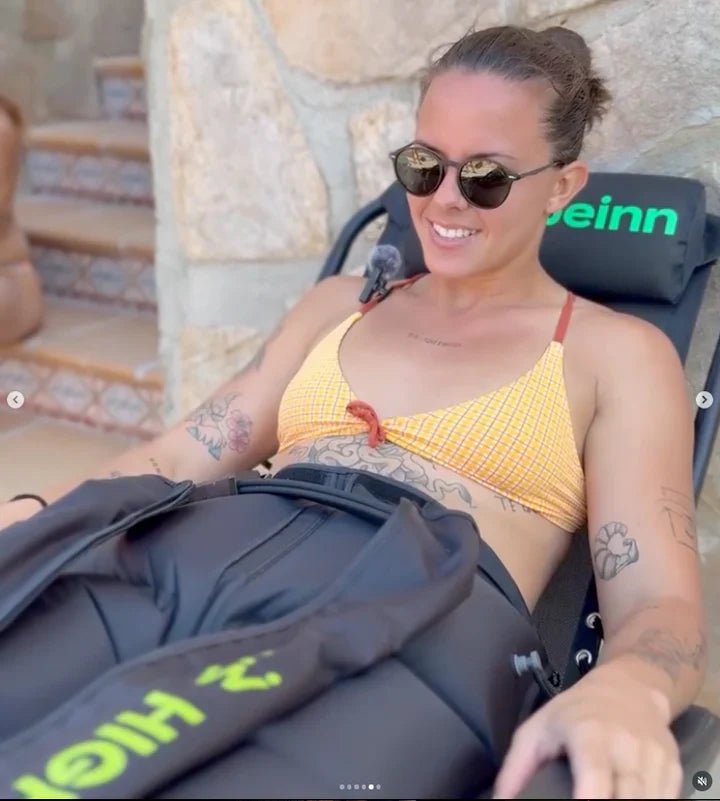


Pressotherapy is one of those therapies that takes time to understand until you try it. It’s not a massage, not a sauna, not vibration. It’s sequential pneumatic compression: a device inflates and deflates air chambers around your legs, abdomen, or arms in a specific order to push lymphatic fluid in the right direction. Simple in concept, powerful in result.
What surprised me most when I started using it wasn’t the sensation — which is pleasant, like a deep, rhythmic massage — but the consistency of the results. Four days of use and the legs already feel lighter. It’s not a placebo: there’s a real physiological mechanism behind it.
This article explains that mechanism, what recent science says, how many sessions you need depending on your goal, and whether it makes economic sense to buy a device for home use.
| Aspect | Details |
|---|---|
| What it is | Sequential pneumatic compression that stimulates the lymphatic and venous systems |
| Session duration | 30-45 minutes (full protocol: 60-90 min) |
| What it is for | Sports recovery, circulation, fluid retention, cellulite, edema |
| First results | Legs: 4-6 sessions · Sports recovery: 1-2 sessions |
| Recommended frequency | At least 1 session per week for 8 weeks |
| Home device price | From ~€500 · Break-even in 10-15 sessions compared to clinic |
| Contraindications | Thrombosis, pregnancy, severe heart conditions, open wounds |
| Combine with | Manual lymphatic drainage for maximum effectiveness |
What pressotherapy is and how it really works
When you describe pressotherapy to someone unfamiliar with it, the first reaction is usually skeptical. "A suit that inflates with air? What’s that for?" The short answer is that the lymphatic system — unlike the cardiovascular system — doesn’t have its own pump. It depends on muscle movement, breathing, and external compression to move lymphatic fluid toward the lymph nodes. Pressotherapy supplements that pump.
Pressotherapy devices work with boots, cuffs, or vests divided into chambers that inflate in sequence, usually from distal to proximal — that is, from the feet toward the groin, or from the hands toward the shoulders. This movement pushes the lymphatic fluid in the right direction, reduces fluid buildup in tissues, and simultaneously improves venous return.
What sets a good device apart from a basic one is programmable pressure, the number of chambers (more chambers = more precise movement), and the ability to adjust sequences. Modern professional home pressotherapy devices accurately replicate protocols that were previously only available in clinics.
The mechanism no one explains to you
The superficial explanation is that pressotherapy "improves circulation." Correct, but incomplete. The real mechanism has several steps worth understanding.
When the chamber inflates and applies pressure to a body segment, it generates a transient local hypoxia: a momentary reduction of available oxygen in that area. The body responds to this hypoxia by dilating local blood vessels to compensate. When the pressure is released, blood flow rebounds — there is a sudden increase in capillary flow.
This repeated cycle of compression-decompression has three linked effects. First, it accelerates soft tissue regeneration because the tissue receives rhythmic waves of nutrients and oxygen. Second, it facilitates the removal of metabolic waste products — lactate, creatine kinase, inflammatory markers — that accumulate after intense exercise or inactivity. Third, it mechanically activates lymphatic drainage, reducing edema and the feeling of heaviness.
It is a well-documented mechanism that explains why pressotherapy is not just an aesthetic tool but also one for performance and recovery.
The benefits of pressotherapy with real evidence
Most articles about pressotherapy mix proven benefits with marketing claims without distinguishing between the two. We need to separate what science says from what intuition says.
A meta-analysis published on PubMed — which analyzed 12 studies with 322 participants — found that pressotherapy significantly reduces delayed onset muscle soreness (DOMS) with a small to moderate effect size (SMD = −0.33). It’s not magic, but it is statistically significant and, most importantly, clinically relevant for those who train regularly.
Beyond the studies, consistent user experience confirms the patterns: pressotherapy works well for specific things, less so for others, and the results are always conditioned by consistency and other habits.
For sports recovery
This is the use where pressotherapy has the strongest evidence. DOMS — that muscle soreness that appears 24-72 hours after intense training — is the bane of anyone who trains seriously. It limits training frequency, lowers performance in consecutive sessions, and, for athletes with tight schedules, can be the factor that makes the difference between competing well or just halfway.
The mechanism explained in the previous section is especially relevant here: pressotherapy speeds up the elimination of inflammatory markers that cause that feeling of stiffness and pain. It does not numb the pain—it resolves it at the source. One or two sessions after an intense workout are enough to notice an immediate improvement in muscle sensation the next day.
For athletes who train several times a week—cyclists, runners, strength athletes—the recovery protocol makes sense even as a preventive use: a session the night after each demanding workout keeps the muscle in optimal condition for the next stimulus.
For circulation and tired legs
Spending many hours standing or sitting, long trips, summer heat, work that involves standing for hours: all of this accumulates in the legs as heaviness, swelling, and that feeling that the legs weigh more than they should by nightfall.
Pressotherapy works directly on the poor venous return that causes that sensation. By pushing venous and lymphatic fluid back toward the heart, it reduces fluid buildup in the lower limbs. The results here are among the fastest: between 4 and 6 sessions on legs already show clear changes in circulation and fluid retention, although aesthetic changes take longer.
Regular use experience confirms it: putting on the pressotherapy boots after dinner and feeling your legs more rested before going to bed is one of those small habits that change the quality of sleep and the following mornings. Circulation improves quite quickly. Aesthetic changes require more consistency.
For cellulite and fluid retention
This is the best-selling benefit and, honestly, the one that requires the most nuance. Pressotherapy demonstrably reduces fluid retention and, by improving local circulation, can help improve the appearance of skin with cellulite. But it must be clear: pressotherapy alone does not eliminate structural cellulite.
What it does do is improve circulation in the subcutaneous tissue, reduce edema that accentuates the appearance of cellulite, and, combined with exercise and proper nutrition, contribute to visible results. In the abdominal area, the process is slower: between 6 and 10 sessions to notice real changes. In the case of edema, one month of consistent use is the realistic timeframe.
The right expectation makes the difference between those who quit after three sessions and those who reach the results.
Pressotherapy at home vs. clinic: the clear numbers
This is the calculation almost no one does for the reader, and it is the one that most clearly helps make a sensible purchase decision.
A pressotherapy session at a physiotherapy clinic or aesthetic center costs between 30 and 50 euros in Spain. A professional pressotherapy device for home use starts at around 500 euros for entry-level models with good features.
| Concept | Clinic | Home |
|---|---|---|
| Cost per session | 30-50 € | 0 € (paid off) |
| Initial investment | 0 € | From ~500 € |
| Break-even | — | 10-15 sessions |
| Availability | By appointment, scheduled hours | 24/7, no appointment needed |
| Supervision | Professional | Self-taught (with guide) |
The break-even point is at 10-15 sessions: from there, each session at home costs nothing. For someone doing one session per week, the equipment pays for itself in less than four months. From the fourth month on, all benefits are net savings compared to going to the clinic.
The clinic has its place: when you need an initial supervised protocol, when you want to combine with manual lymphatic drainage performed by a professional, or when you have a specific condition that requires prior evaluation. But for maintenance use, sports recovery, or improving daily circulation, home equipment is economically unbeatable from the second or third month.
How many sessions you need according to your goal
One of the most frequently asked questions and also one of the most poorly answered on the internet. The answer "it depends" is true but useless. What lies beneath that "it depends" is quite concrete.
The general protocol recommended for most goals is a minimum of one session per week for eight weeks —a full two-month cycle. This is not arbitrary: the lymphatic system responds to repeated stimuli, and changes in circulation and tissue consolidate with continuity.
| Goal | First results | Frequency |
|---|---|---|
| Sports recovery | 1-2 sessions | After each intense workout |
| Tired legs | 4-6 sessions | 3-5 times per week |
| Fluid retention (abdomen) | 6-10 sessions | 1 session daily, 30-day cycles |
| Edema | 1 month of consistent use | Daily during the cycle |
| Facial | 3-5 sessions | 2-3 times per week |
| General maintenance | Continuous | 1-2 sessions per week |
The variable that most affects results, beyond the number of sessions, is consistency. Ten sessions in one month give better results than ten sessions spread over six months. The tissue responds to accumulated and regular stimulus, not sporadic.
And an important nuance: the results of pressotherapy are always conditioned by the context of the rest of the lifestyle. Hydration, moderate physical activity, a diet without excess salt and sodium — all these factors amplify or limit what pressotherapy can do.
How to use pressotherapy correctly
Knowing how to use a pressotherapy device at home is not complicated, but there is a notable difference between plugging it in and putting on the boots and following a protocol that maximizes results.
A technical detail that few explain: the complete pressotherapy protocol lasts between 60 and 90 minutes, not 30-45. The session itself is 30-45 minutes, but the optimal protocol includes manual lymphatic drainage before or after to ensure that the mobilized proteins and waste are properly eliminated. For maintenance use and sports recovery without pathological conditions, the session alone is sufficient; for edema or lymphedema conditions, combining with manual drainage is important.
Before the session
Pre-hydration: drink at least one glass of water before starting. The lymphatic system works with a fluid medium; good hydration facilitates the movement of the liquid.
Appropriate clothing: wear tight but not restrictive clothing under the boots or vest. The clothing should not create folds that interfere with the uniform pressure of the chambers.
Time of day: the session can be done at any time, but many users prefer the late afternoon or evening because the feeling of light legs improves rest. If the goal is sports recovery, the session as soon as possible after training maximizes the benefits.
During the session
Moderate initial pressure: if it is your first session or you haven't used the equipment for a while, start with a lower pressure than you think you need. The body adapts quickly; it is better to increase gradually than to start with a pressure that causes discomfort.
Duration: 30-45 minutes is the standard session time. Longer sessions do not always produce better results and can cause overload if the lymphatic system cannot process the volume moved.
Signs to respect: if you feel intense tingling, numbness, pain, or excessive pressure, reduce the pressure. Pressotherapy should be comfortable. Slight noticeable pressure is normal; pain is not.
After the session
Water: drink water immediately afterward. The session mobilizes fluids and waste toward the circulatory system for elimination; hydration facilitates this process. One liter in the following hour is a good reference.
Nutrition: if you are going to eat afterward, choose something light and high in fiber. Avoid heavy or salty meals for two hours afterward: the draining effect is enhanced by a diet that does not cause additional retention.
Physical activity: light exercise—walking, gentle stretching—is compatible and can enhance drainage. What should be avoided is intense physical effort in the following hours.
Post-session clothing: loose clothing for at least one hour after the session. Compression has ended; it makes no sense to replace it with tight clothing that interferes with venous return.
Contraindications: when NOT to use pressotherapy
Pressotherapy is a safe therapy for most healthy people, but there are real contraindications that should not be ignored. Pneumatic compression has systemic effects, and in certain conditions, these effects can be harmful.
Absolute contraindications:
- Deep vein thrombosis or history thereof: pressotherapy can mobilize an existing thrombus. This is the most important contraindication and the most dangerous if ignored.
- Pregnancy: abdominal compression and intense circulatory stimulation are not compatible, especially from the first trimester onward.
- Severe heart disease: pressotherapy increases venous return to the heart. In people with heart failure, this increase can overload an already compromised heart.
- Severe kidney failure: the renal system is responsible for filtering the mobilized waste. Severe failure may not be able to handle that additional volume.
- Open wounds, active eczema, psoriasis, or dermatitis in the treatment area.
- Implanted medical devices: pacemakers, defibrillators, or any electronic device in the treatment area.
- Recent surgery: post-surgical tissue needs to heal without interference from external pressure.
- Malignant tumors: pressotherapy stimulates lymphatic and circulatory flow, which in the presence of malignant cells may facilitate their spread.
If you have any doubts about whether pressotherapy is suitable for you given your medical history, consulting a doctor or physiotherapist before starting is the right step.
Frequently Asked Questions
Does pressotherapy hurt?
No. The sensation is rhythmic compression, similar to a deep massage. If there is pain, the pressure is too high. It should be reduced: pressotherapy must be comfortable.
How long does it take to take effect?
It depends on the goal. Sports recovery: 1-2 sessions. Tired legs: 4-6 sessions. Abdominal area or chronic edema: one month of consistent use.
Can it be used every day?
Yes, in intensive 30-day cycles for specific conditions. For maintenance or sports recovery, one session daily or several times a week is perfectly viable.
Is pressotherapy at home as effective as in a clinic?
Current professional devices for home use replicate the features of clinic devices in pressure, chambers, and sequences. The main difference is supervision. For maintenance and recovery without pathology, a good home device is equivalent in results.
Does pressotherapy eliminate cellulite?
It does not eliminate it by itself, but helps improve its appearance by reducing edema and improving local circulation. The best results are achieved by combining it with exercise and proper nutrition.
What is the difference between pressotherapy and manual lymphatic drainage?
Manual drainage is a technique performed by a professional using hands, with very low-pressure movements. Pressotherapy is sequential pneumatic compression. They complement each other: manual drainage is more precise in specific areas; pressotherapy covers larger surfaces and allows home use. The combination gives the best results.
How much does a home device cost?
Entry-level devices with good features start at around 500 euros. The break-even point compared to clinic session costs (30-50€/session) is reached in 10-15 sessions — less than four months with regular use.
Ready to try pressotherapy at home?
Professional devices with sequential chambers, adjustable pressure, and sports recovery protocols.
View pressotherapy devices
Artículo redactado por...
Jorge Albert Mallabrera
Redactor especializado en fitness, recuperación muscular y bienestar.
Miguel Artín
CEO en Welbeinn · Especialista en terapias de recuperación.
Caetano
Equipo Welbeinn · Producto y protocolos de uso.
Share:
Red Light for Sleep: How to Use It to Improve Rest
Lipedema: What It Is, Symptoms, and Causes