
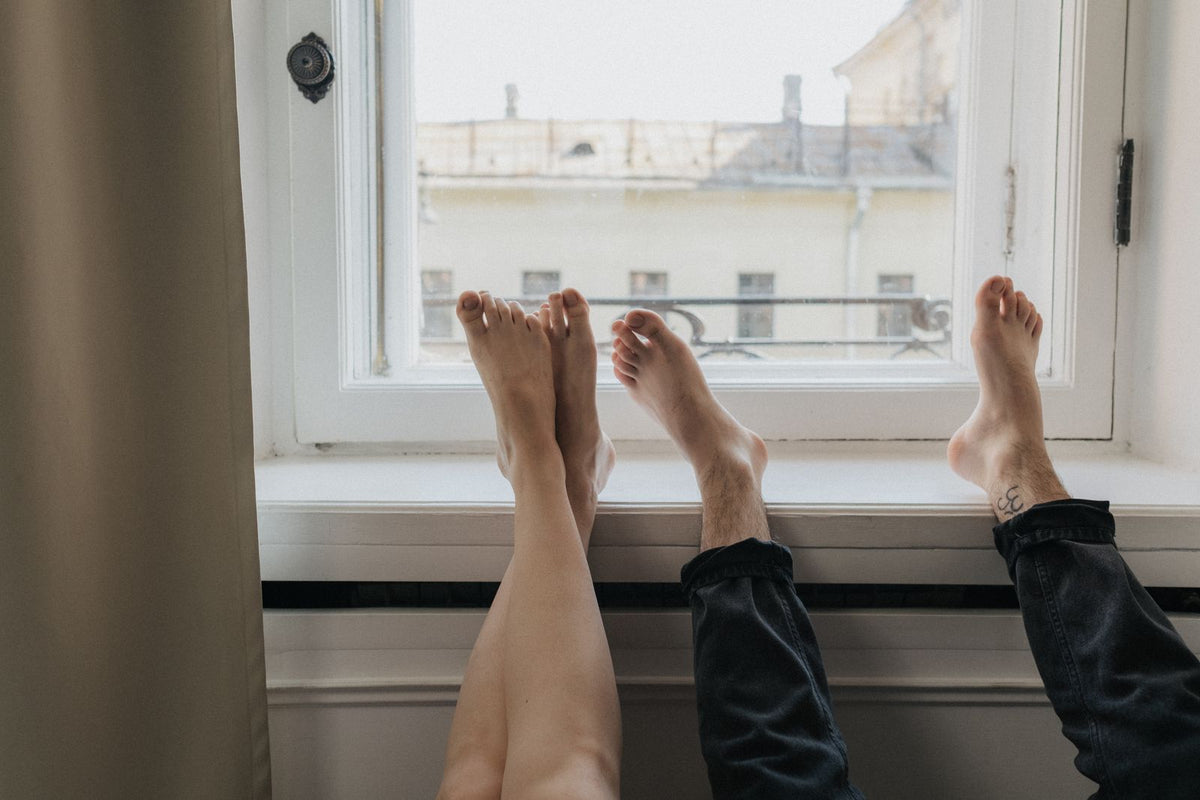


You get home, take off your shoes, and there it is: the sock mark indented around your ankle, feet like two loaves of bread, and legs that feel twice as heavy as they did this morning. You don’t want an explanation of how the venous system works. You want the swelling to go down, preferably before dinner.
This is it: what to do today, over the next 20 minutes, to reduce leg swelling, organized step by step and adapted to the cause (heat, many hours standing, a long trip, or an entire day sitting in a chair). And, first of all, the warning signs that say this isn’t just tiredness and that it’s time to see a doctor, not try a home remedy.
| What to do | How long | Why it helps |
|---|---|---|
| Remove anything that feels tight | 1 minute | Elastic socks and tight clothing hinder the return of blood |
| Ankle pumps | 2-3 minutes | The calf is the pump that moves blood back up to the heart |
| Elevate your legs | 10-15 minutes | Gravity starts working in your favor |
| Cool water from the bottom upward | 2-3 minutes | Cold constricts the veins and relieves the heavy feeling |
| Walking | 5 minutes | Activate your calf after hours of inactivity |
| Pressotherapy on a gentle setting | 15-20 minutes | Pressure moving from the feet upward while you rest |
Your 20-minute plan to reduce leg swelling
Tell us why your legs have swollen and where you are. We’ll give you the steps, minute by minute.
Select all that apply
 Measurable health · Compression therapy
Clinic-grade compression therapy, at home and cable-free
Trousers with six chambers that compress in sequence from foot to hip, including glutes and lower back.
6 chambers · pressure adjustable from 0 to 200 mmHg · 5 programmes: circulation, sport and mixed
View the HighFly Pro Max€749,00
First of all: when it’s not just tiredness
The vast majority of swollen legs at the end of the day are simply due to heat, gravity, and too little movement. But some swelling doesn’t go away with cushions, and it’s worth ruling it out before getting started.
- One leg alone has swollen, especially if it happened suddenly.
- There is pain in the calf, heat, or redness in the area.
- You notice shortness of breath, chest pain, or a racing heart: in that case, call 112 immediately.
- Both legs become very swollen within a few days, or you have trouble breathing when lying down.
- You’re pregnant and the swelling suddenly appears in your face or hands, or comes with a severe headache.
It is not just fatigue if the swelling is still there when you get up in the morning, if pressing with your finger leaves a dent that takes a while to disappear, or if it started after changing medication. Some blood pressure medications, anti-inflammatory drugs, or hormone treatments can cause swollen ankles: discuss it with your doctor and do not stop anything on your own.

How to reduce leg swelling quickly, step by step
If there are no warning signs, this is the order that works. You do not need any equipment: a sofa or bed, two cushions, and the shower. The widget above adjusts it to your situation, but the logic is always the same: first remove obstacles, then activate the pump, and finally let gravity do the rest.
1. Remove anything that is tight (1 minute)
Shoes, socks with elastic that leaves a mark, tight jeans, the waistband. Anything that compresses one specific spot acts like a tourniquet and slows the return. Note that this is not the same as graduated compression, which is tighter lower down than higher up and helps move blood upward: the problem is elastic that squeezes in just one place.
2. Ankle pumps (2-3 minutes)
Lying down or sitting, point your toes toward you and then stretch them out, as if pressing a pedal. Thirty times, followed by ten circles with each ankle. Each time the calf contracts, it squeezes the veins in the lower leg and pushes the blood upward. It is the pump that stops working when you spend hours standing still or sitting.
3. Legs elevated (10-15 minutes)
Lie down and rest your heels on two cushions so that your feet are above heart level. You can also rest your legs against the wall if that is comfortable. Every three or four minutes, repeat ten pumps. This is the step that reduces swelling the most, and the one most people skip because they remain sitting on the sofa with their feet on the floor.
4. Cool water from bottom to top (2-3 minutes)
In the shower, slowly direct a stream of cool water from your ankles up to your thighs. Cool, not icy: you want relief, not a shock. Cold constricts the veins, and the feeling of heaviness decreases almost immediately. If it is hot, this is the step you will notice most; otherwise, you can leave it until the end.
5. A glass of water and little salt at dinner
It may seem counterintuitive, but when you lack water, your body tends to retain more. Drink normally and, above all, watch the salt at dinner: cured meats, ready-made meals, snacks, and sauces. That is what determines how you will feel when you get up tomorrow.

What to do depending on why they have swollen
The basic plan works for almost everything, but each cause has its own nuance. If you want to understand why each one happens, we explain it in why your legs hurt more in summer and in what happens to your legs after standing for five hours. Here is the practical advice:
| Cause | First | What makes the biggest difference tomorrow |
|---|---|---|
| Heat | Cool water from ankles to thighs and elevated legs | Move around first thing, eat less salt, and wear loose clothing |
| Many hours standing | Ankle pumps and elevated legs | Wear compression during your shift and do calf raises every hour |
| Plane, train, or car | Walk for five minutes before lying down | Wear compression from home, get up every hour, and drink water instead of alcohol |
| All day sitting | Calf raises and a short walk | Get up every 45-60 minutes and do not cross your legs for hours |
If you are still away from home
At work, in an airport, or in the car, you cannot lie down, but you can do almost everything else. Pump your ankles while seated, walk for five minutes, put your feet on a chair or suitcase, and do twenty calf raises. You do not need to raise them above your heart to feel relief: any height the space allows will help.

Home remedies to reduce leg swelling: what works and what does not
There are many traditional remedies for swollen legs. Some have a basis, others provide relief by sensation, and others simply do nothing. Separating them saves time:
| Remedy | Does it work? | Why |
|---|---|---|
| Elevate your legs | Yes | It reduces swelling the most in a short time |
| Walking and moving your ankles | Yes | Activates the calf muscle pump |
| Cool water | Yes, for relief | It relieves the heaviness immediately; the effect does not last long if you do nothing else |
| Drink water and reduce salt | Yes, in the medium term | It is more noticeable the next day than immediately |
| Massage from the bottom upward | Helps | Gently and toward the heart; never on a painful or hot leg |
| Foot bath with coarse salt | Not much | It relaxes and relieves discomfort, but it does not remove fluid from the legs |
| “Detox” teas | Not much | They will make you go to the bathroom more, but they do not correct the cause of the swelling |
| Direct ice on the skin | No | It can burn the skin; cool water or a cold towel is better |
| Diuretics on your own | No | Prescription only: if used incorrectly, they dehydrate you and disrupt your body's electrolyte balance |
When it happens often: compression and pressotherapy
If the swelling is just a one-off, the 20-minute plan is enough. If it happens several times a week, it is worth changing two things: preventing it during the day and having a convenient solution for the end of the day.
During the day, graduated compression: tighter at the ankle and looser higher up, helping blood along its path. Lightweight compression socks, such as Lurbel x Wellbeinn (15-20 mmHg, flat seams, and breathable fabric), can be worn under trousers at work or while traveling. Put them on in the morning, before your leg swells. Higher compression levels are therapeutic and require medical advice.
At the end of the day, compression therapy does the same thing as elevating your legs, but actively: air chambers inflate in sequence and push from the feet upward. If you want to see how it applies to fluid retention, you can find it in swollen legs and fluid retention.

HighFly Pro — Compression therapy boots
Six sequential air chambers that drain from the feet to the hips, with adjustable pressure ranging from a gentle massage and six operating modes. Wireless, with more than 3 hours of battery life, for use on the sofa or in bed.
View productFrequently asked questions
Lie down with your legs above heart level and move your ankles every few minutes. You will notice a difference in 10-15 minutes. If you also start with cool water from the bottom upward, the feeling of heaviness subsides sooner.
Ten to 20 minutes is enough to notice relief, and you can repeat it two or three times a day if needed. The important thing is for your feet to be above your heart, not just resting on a low footstool.
Because blood and fluid have to move upward against gravity, and this depends on the calf muscle moving. After hours of standing still, sitting, or being in the heat, this return is insufficient and fluid accumulates in the ankles and feet. It usually goes down after a night's rest.
It is not an immediate effect, but it helps. If you drink too little, the body tends to retain more fluid. What you do notice immediately is reducing salt: a very salty day often leads to more swollen legs the next day.
Cool water. Heat dilates the veins and worsens the feeling of heaviness, so very hot baths or saunas do not help at that moment. Run cool water from your ankles toward your thighs for two or three minutes, without making it ice-cold.
Walk for five minutes before lying down, then raise your legs while pumping your ankles, and finish with cool water. For your next trip, put on compression socks at home and get up every hour. If one leg swells and hurts after a long flight, it isn’t just fatigue: see a doctor.
They are more useful for prevention than for reducing swelling immediately. Worn in the morning, they prevent fluid from accumulating during the day. Light compression, 15-20 mmHg, can be used without a prescription; higher levels are therapeutic and require medical guidance.
When one leg swells, when there is pain, heat, or redness, when you are short of breath, or when the swelling does not go down after a night’s rest. Also if it started after taking a new medication. In all these cases, see a doctor before trying home remedies.
It helps move fluid from the feet upward with pressure that progresses in sections, which is why many people notice lighter legs after a session. It does not replace medical care if the swelling has an underlying cause, and it has contraindications that should be reviewed beforehand.
In summary
To reduce leg swelling quickly, you don’t need anything unusual: remove anything tight, move your ankles, raise your legs above your heart for fifteen minutes, and finish with cool water. If it happens often, the difference lies in prevention during the day and having a comfortable option for the evening.
And most importantly: a single swollen leg, pain, heat, redness, or shortness of breath should not be treated on the sofa. For everything else, follow the plan above and, if your case is daily, check out the compression socks for daytime and the HighFly Pro for the end of the day.
It’s not magic. It’s gravity, muscle, and consistency.
Redacción y revisión del artículo
Share:
What happens to your legs after standing for 5 hours straight
Bioimpedance scale: what it really measures and how to read your data