
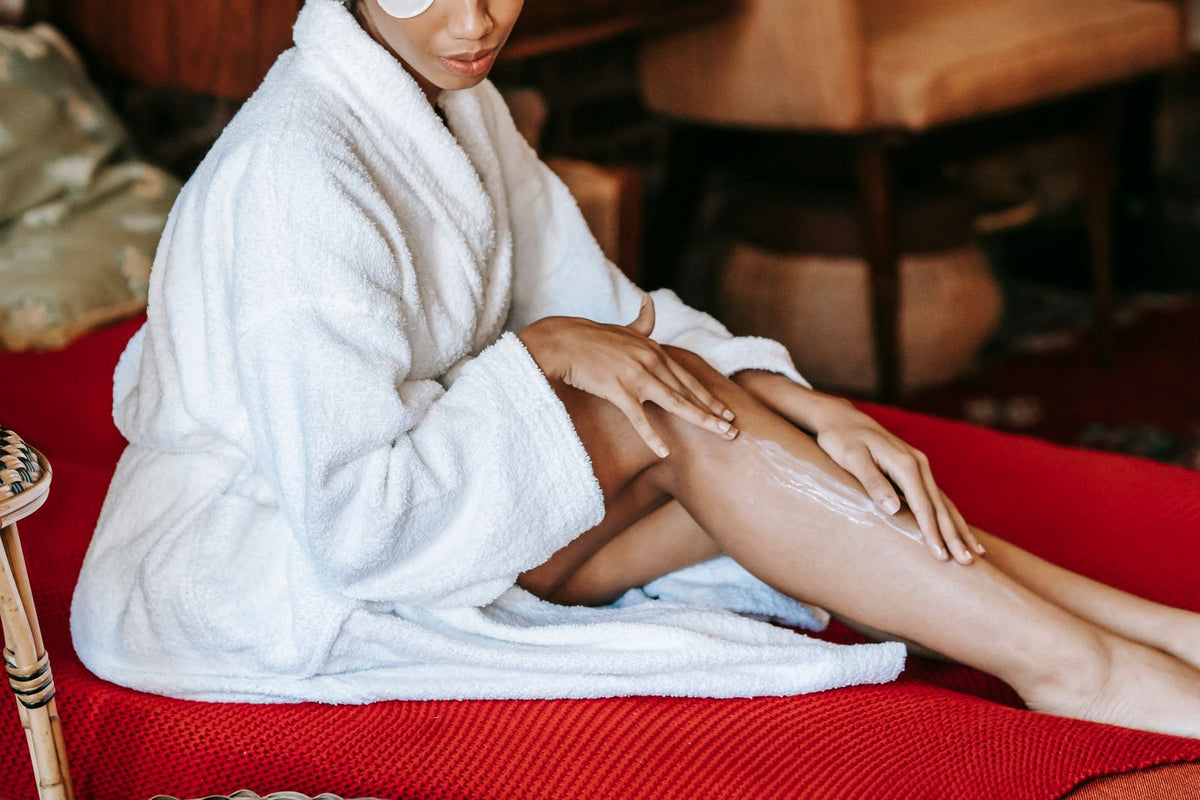


You get home, take off your shoes, and your legs feel as heavy as if they were filled with sand. You open the drawer, apply the cream for tired legs, and a few seconds later that cooling sensation arrives, seeming to fix everything. Half an hour later, the heaviness is still there. Did it work or not?
Both. A cream for tired legs relieves the sensation, and does so quickly, but it does not change what causes it. Here is what each ingredient really does, what you can and cannot expect, how to apply it to notice more of an effect, and when it is worth adding something else.
| Ingredient | What you notice | What it does not do |
|---|---|---|
| Menthol | Immediate cooling and a feeling of lightness | It does not reduce swelling or improve the veins |
| Camphor | A cooling sensation that later warms, with slight relief from discomfort | It does not activate circulation in the long term |
| Horse chestnut | Little to notice in the moment | In a cream, its effect is modest; it has been studied more extensively when taken by mouth |
| Butcher's broom | Little to notice in the moment | Like horse chestnut: in a cream, it contributes little on its own |
| Gotu kola | Skin that is more cared for and smoother with use | It does not noticeably change circulation |
| The massage when applying it | Helps move the fluid upward while you use it | The effect lasts as long as it takes you to spend hours standing again |
Which combination is right for you?
Tell us how heavy your legs feel and how often. We will tell you whether the cream is enough or whether it would be better to add something else.
Select what applies to you

 Measurable health · Compression therapy
Clinic-grade compression therapy, at home and cable-free
Trousers with six chambers that compress in sequence from foot to hip, including glutes and lower back.
6 chambers · pressure adjustable from 0 to 200 mmHg · 5 programmes: circulation, sport and mixed
View the HighFly Pro Max€749,00
What a cream for tired legs does
Heavy legs almost always have the same cause: blood and fluid have a harder time moving upward than downward. Spending hours standing or sitting, heat, long trips, or simply the end of the day cause them to build up in your ankles and calves. That is what you notice as heavy legs.
A cream works on the skin, not inside the veins. It does two things, and both are real: it tricks the cold receptors, so you feel cooling even though the leg's temperature barely changes, and it makes you give yourself a massage, which is what really helps move the fluid while you do it. That's why the relief is immediate. And that's also why it's temporary.
If you want to understand why legs feel heavy, it's explained in poor circulation in the legs. Here, we'll focus on what a cream can do.

Ingredients in creams for tired legs: what you feel with each one
Almost all creams on the market combine two types of actives: those that provide a cooling sensation, which you feel immediately, and the plant extracts traditionally associated with venotonic effects, which sound good on the label but contribute less than it may seem when they are used in a cream.
Menthol and camphor: the cooling sensation you can feel
Menthol activates the same skin receptors that detect cold. The result is a cooling sensation within seconds, which most people perceive as lighter legs. Camphor adds a cooling sensation that gradually becomes warm, along with a mild soothing effect on discomfort.
What you feel is real, but it's a sensation: it lasts for a while, not for hours, and doesn't change what is happening inside your leg. It works very well for what it promises, which is immediate relief at the end of the day or after exercising.
Horse chestnut and butcher's broom: what they claim and what they do in a cream
They are the two most classic extracts for heavy legs. Horse chestnut provides aescin, while butcher's broom provides its own compounds; both have traditionally been used to help support vein tone. They have been studied most extensively when taken orally, in preparations sold at pharmacies, which you should check with your doctor or pharmacist before using, especially if you take other medication.
With a cream, things are different: the amount that penetrates the skin is small, and the effect you can expect is modest. They do no harm, but if you choose a cream just because it contains them, you're paying more for the label than for the result.
Centella asiatica and other skin-care actives
Centella asiatica is best known in cosmetics for caring for the skin: it leaves it smoother and more comfortable. In a leg cream, it plays that role, just like witch hazel or red vine. That's fine, but they are skin-care actives, not circulation actives.
What cream cannot do
This is the part almost no one tells you, and it's what saves you from disappointment:
- It doesn't eliminate fluid retention. If your sock leaves a mark at night, the cream eases the sensation, but the fluid remains until it moves.
- It doesn't cure or erase varicose veins. Varicose veins should be assessed by a doctor.
- It doesn't replace compression stockings recommended by a professional.
- It doesn't last all day. Menthol's cooling sensation only lasts for a while. If the heaviness returns as soon as you spend hours standing again, that's to be expected.
With age, legs also tend to feel heavier, and cream alone falls short sooner. We explain it in why your legs feel heavy after 40.

How to apply cream for greater effect
Half the effect lies in the technique. The same cream, applied poorly, just provides a cooling sensation; applied correctly, it helps you move fluid.
- Clean, dry skin. Preferably after showering, and if you can, finish with a stream of cold water from ankle to knee.
- Always work from the bottom up. Start at the foot and ankle and move up toward the knee and thigh, with your hands around the leg. Never the other way around.
- Two minutes per leg. Apply gentle, steady pressure without pressing on visible veins.
- Elevate your legs afterward. Ten or fifteen minutes with your feet above your hips add to the massage.
- Store it in a cool place. In summer, the cooling sensation is more noticeable.

Lightweight cooling-effect gel cream
With menthol and camphor for an immediate cooling sensation. Lightweight, fast-absorbing texture designed for upward massage on the feet and legs. 100 ml.
View productOur gel cream follows the approach we've described: menthol and camphor for a cooling sensation, without promising what a cream can't do.
When cream falls short: compression and compression therapy
If your heaviness occurs from time to time, the cream is enough. If it happens almost daily or comes with swelling, you need something that works while the problem is occurring or moves the fluid more forcefully than your hands.
| Option | Who it is for | When to use it |
|---|---|---|
| Cream alone | Occasional heaviness, with no visible swelling | At the end of the day or after exercising |
| Cream + compression | Frequent heaviness, many hours standing or sitting, travel | Compression stockings or socks in the morning; cream at night |
| Cream + pressotherapy | Almost daily heaviness with swelling at the end of the day | 20-30 minute session followed by the cream |
Graduated compression is tighter at the ankle than higher up and helps prevent fluid from pooling down below while you are standing. Pressotherapy uses air, through chambers and from the feet to the hips, to do what you do with your hands for two minutes. If you are interested in the latter, here is how pressotherapy works on the legs.
When it is not just tiredness: see a doctor
Tired legs are very common and almost always benign. But there are signs that should not be treated with cream:
- One swollen leg, especially if it happens suddenly.
- Pain, warmth, or redness in the calf.
- Shortness of breath or chest pain: in that case, call 112.
- Changes in the skin around the ankle (dark spots, hardened skin, or wounds that do not heal).
- Swelling that does not go down even after sleeping with your legs elevated.
In any of these cases, do not massage that leg until a doctor has examined you.
Frequently asked questions
For immediate relief, choose one with menthol or camphor and a light texture that absorbs quickly and allows you to massage the area. Horse chestnut or butcher's broom extracts do no harm, but they offer little in a cream. More than the brand, what matters is applying it properly: from the ankle upward, for a couple of minutes per leg.
They work for what they can do: relieve the feeling of heaviness for a while. They do not eliminate fluid retention or improve your veins. If you expect that, you will be disappointed; if you use them for relief and as an excuse to massage your legs, they do the job.
The cooling sensation of menthol is noticeable within seconds and lasts for a while, usually less than an hour. The feeling of lightness may last a little longer if you combine it with massage and keeping your legs elevated. If you spend hours standing again the next day, the heaviness will return.
The usual amount is once or twice a day, for example in the morning and at night, or after exercising. More isn’t necessary: the effect does not build up by applying a larger amount. Always follow the instructions on the packaging.
A cool place makes the freshness more noticeable, especially in summer. It isn’t necessary, and if you keep it in the refrigerator, store it in an area without sudden temperature changes. The important thing is to keep it closed, in a cool, dry, dark place.
No. They do not reduce or cure them. If you have visible varicose veins, apply without rubbing them hard and have them assessed by a doctor, who will decide whether you need compression or another treatment.
Heaviness is very common during pregnancy, but not all active ingredients are suitable. Before using a cream containing camphor or other extracts, ask at the pharmacy or your midwife. In the meantime, elevating your legs, walking, and using cold water at the end of your shower are a good foundation.
It has been studied most when taken orally; in a cream, the expected effect is small. Oral preparations are sold in pharmacies and can interact with other medicines, such as anticoagulants, so it is advisable to consult your doctor or pharmacist beforehand.
They do different things. The cream relieves the feeling at the end of the day; compression works while you are standing or sitting and helps prevent fluid from accumulating. If the heaviness is frequent, the most noticeable approach is to combine them: compression in the morning and cream at night.
In summary
A cream for tired legs does one thing well: relieve the feeling of heaviness in the moment. Menthol and camphor provide the freshness; massaging from the bottom upward does the useful part. Plant extracts add little in a cream, and no cream eliminates fluid retention or fixes veins.
If your heaviness is occasional, the cream and a good massage are enough. If it’s daily, add compression or pressotherapy, and if you spend the day on your feet, also see what happens to your legs after standing for five hours. For end-of-day freshness, try the cooling-effect gel cream.
It’s not magic. It’s cold, massage, and consistency.
Redacción y revisión del artículo
Share:
Poor circulation in the legs: why it appears after age 40 and what can be done
Magnesium deficiency: symptoms, causes, and what to do