
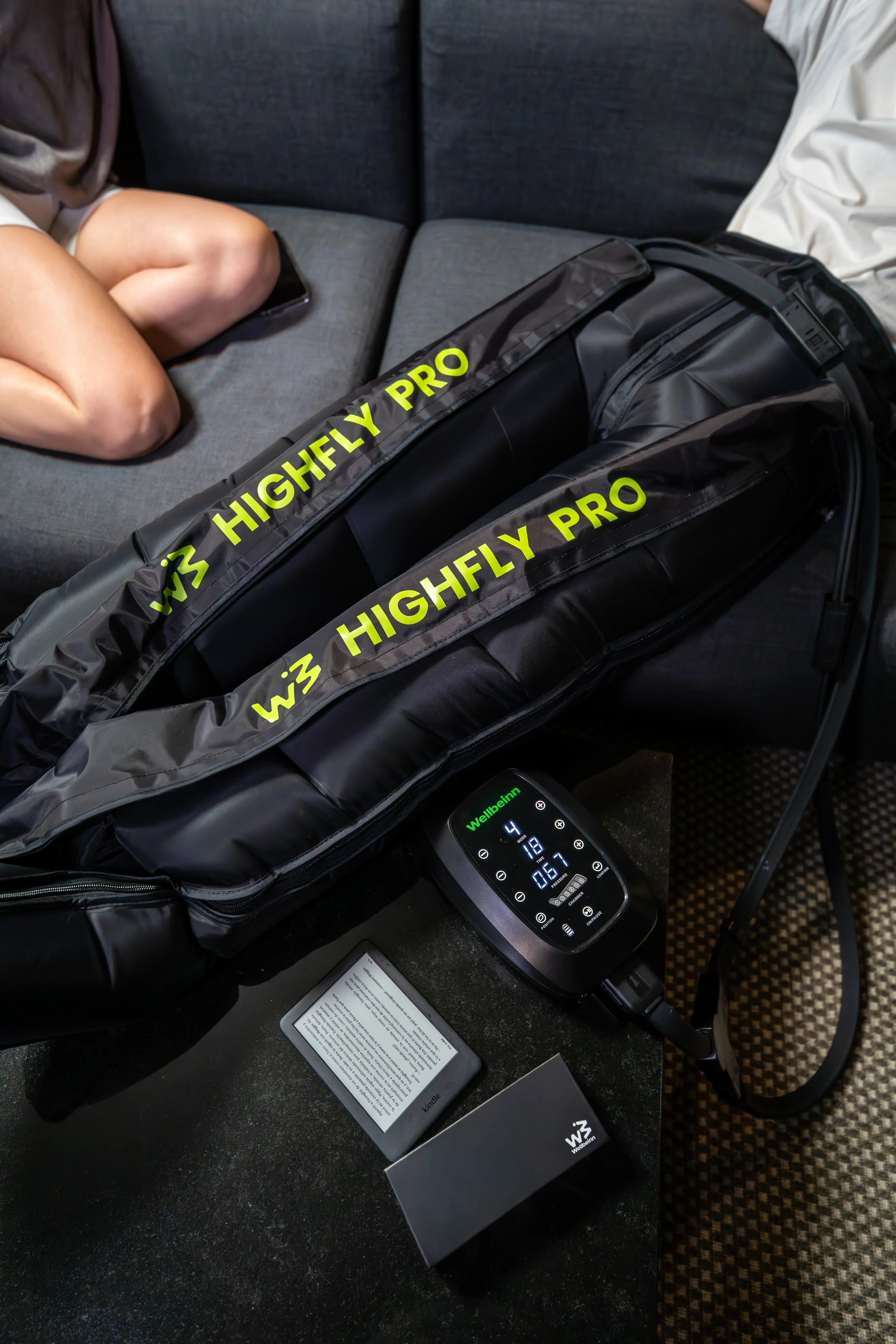


You’re looking for pressotherapy boots for home and find a huge range: models for 150 euros and models over a thousand, with specifications that seem taken from an engineering manual. Chambers, mmHg, overlap, programs… and the feeling that you don’t know what really sets some apart from others.
This guide gets straight to the point. It explains what you really need to look at before buying, what things are marketing, and which make a real difference for your legs, and how to know what type of boots fit your case. You don’t need to become an expert: just understand six criteria to choose well and not waste your money.
| Before buying, look at | Why it matters |
|---|---|
| Areas it covers | Leg only, or also hip and buttock |
| Number of chambers | More chambers, gentler and progressive massage |
| Adjustable pressure | Ability to adjust intensity to your tolerance |
| Programs / modes | Sequential, by zones, ascending drainage |
| With cable or battery-powered | Fixed at home or portable for travel |
| Warranty and after-sales service | It’s an electronic device: demand it |
Which pressotherapy boots suit you?
Tell us what you want them for and where you will use them.
What pressotherapy does (and what it doesn’t)
Before comparing models, it’s important to be clear about what you’re buying. Pressotherapy consists of boots with air chambers that inflate in turns, from bottom to top, squeezing the leg in sequence. This massage pushes blood and lymph toward the heart, improves venous return, and helps decongest the leg. Real sensation: lighter and less swollen legs after finishing.
What it is not: a method to lose weight or eliminate fat. It helps with bloating, heaviness, and recovery, not weight. Anyone selling you "lose weight with pressotherapy" is selling you smoke. If you want the details on how it works and what it’s for, you can find them at what pressotherapy is and its benefits.
The 6 criteria that really matter
Here is the heart of the buying decision. Look at them in this order.
1. What areas does it cover
The criterion most people overlook and the one that changes the result the most. Many boots cover only foot, calf, and thigh. Others go up to hip and glute. If your problem is venous return or sports recovery, the full leg coverage is enough. But if you want to work the upper area (hips, glutes), you need a model that includes that part, because that’s often where congestion builds up. A pressotherapy pants, not just boots, makes the difference in those cases.
2. Number of chambers
Each chamber is an independent section that inflates separately. The more chambers, the smoother and more progressive the massage, because the pressure advances in small steps instead of jumps. Basic models have 3-4 chambers; good ones have 6 or more. It’s not a number to brag about: you can feel how natural the wave of pressure rising up the leg is.
3. Adjustable pressure
Pressure is measured in mmHg (the same millimeters of mercury as blood pressure). The important thing is not a high maximum number, but being able to adjust it. Your tolerance on the first day isn’t the same as the next month’s, and a family member using them may not want the same intensity. Avoid boots with only one fixed power level.
4. Programs and modes
A good device offers several modes: sequential ascending (the classic drainage from bottom to top), zone work, and different intensities. You don’t need twenty programs, but a couple well thought out. Be wary of a device that only does one thing.
5. With cable or battery
Here you decide based on your life. Boots with a desktop motor and cable are usually more powerful and complete: ideal if you have a fixed spot at home. Those with an integrated battery weigh less and you can take them anywhere: perfect if you travel, compete away, or don’t want to depend on a power outlet. Neither better nor worse, just different for different lives.
6. Warranty, after-sales service, and origin
They are an electronic device you will use almost daily. A solid warranty, after-sales service in your language, and available spare parts are as valuable as the specifications. The anonymous bargain from a marketplace without support becomes costly the day the motor fails or a chamber gets punctured.
HighFly Pro or HighFly Air: how to choose
If you’ve already decided on serious boots, the usual doubt is between the full desktop model and the portable one. This table sums it up:
| Criterion | HighFly Pro | HighFly Air |
|---|---|---|
| Format | Boots + pants, fixed motor | Portable boots with battery |
| Areas | Full leg, hip, and glute | Full leg |
| Ideal for | Home, intensive use, maximum coverage | Traveling, competing away, moving the team |
| Where it shines | The most complete recovery at home | Take recovery anywhere |

HighFly Pro — Pressotherapy boots + pants
Sequential pressure and full leg coverage, hip and glute. The same recovery as the clinic, in your living room, in 20-minute sessions.
View productPressotherapy boots versus other options
Before spending your money, it’s good to know what boots give you that cheaper alternatives don’t. Not everyone needs pressotherapy; it depends on what you’re looking for.
| Option | What it does | When it fits |
|---|---|---|
| Pressotherapy boots | Sequential active massage, powerful drainage | Deep recovery, frequent use at home |
| Compression stockings | Passive and constant pressure, no massage | Wearing them for hours, traveling, standing work |
| Manual massage | One-off treatment, depends on who provides it | Specific discomforts, occasional session |
| Pressotherapy center | Same effect, but outside the home | Try before buying, very occasional use |
The key difference: stockings compress but don’t move. Boots provide an active massage that pushes blood and lymph in sequence, something a static garment can’t imitate. And compared to going to a center, having them at home changes the game: you use recovery when you really need it, not just when you have free time. That’s why, for regular use, buying them pays off right away.
Five mistakes when buying pressotherapy boots
These are the mistakes that lead people to end up with boots they don’t use or that disappoint:
- Buying based on maximum mmHg. We've said it before, but it's the number one mistake: a high maximum without chambers or regulation is a worse experience than moderate pressure well distributed.
- Forget about sizes. Boots that don’t fit your leg squeeze poorly and lose effectiveness. Check the measurements before buying.
- Ignore the warranty. It’s an electronic device for almost daily use. Without after-sales service or spare parts, the bargain turns into a paperweight the day it breaks.
- Choose boots only when you need hip coverage. If your goal includes the upper area (retention, lipedema), boots that stop at the thigh will fall short.
- Don’t focus on the noise or comfort of the motor. You’re going to use them for 20 minutes straight; a noisy motor or an impossible controller end up in the closet.
How to get the most out of them once you have them
Buying well is half the battle; using them well is the other. Sessions of 15-20 minutes, with your leg comfortable and the pressure at a level you feel firm but not painful. Better after training or at the end of the day, when the leg is more tired. Consistency is key: pressotherapy works best with regular use, not with occasional marathon sessions. You have a detailed routine at how to use pressotherapy at home.
Who it’s not for (and when to consult first)
Pressotherapy is safe for most healthy people, but it’s not for everyone without exception. It’s advisable to consult a professional before using it if you have thrombosis or risk of it, heart failure, severe kidney failure, infections or open wounds on the legs, or if you are pregnant. It’s not that you “can’t”: it’s that in these cases it must be evaluated with medical judgment before starting. Honesty first: boots are a recovery tool, not a treatment for a pathology, and if in doubt, ask first.
Maintenance: making them last for years
A purchase like this pays off if it lasts. And lasting depends on four simple actions. Clean the boots with a slightly damp cloth after use, without soaking them. Store them extended or slightly folded, without sharp creases that strain the air seams. Do not stretch or pull the wiring when putting them on or taking them off. And if they run on batteries, do not leave them completely discharged for months. With that, good boots can last years of almost daily use without losing pressure.
Frequently Asked Questions
From 6 chambers onward, the massage feels smooth and progressive because the pressure advances in small steps from bottom to top. Basic models with 3-4 chambers have more abrupt jumps. It’s not a number to brag about: it’s noticeable in how natural the pressure wave feels moving up the leg.
More than a high maximum pressure, what matters is that it is adjustable. Moderate pressure evenly distributed across many chambers works better than a very high maximum without adjustment. Start at a firm but comfortable level and increase over time according to your tolerance.
No. Pressotherapy helps with swelling, heavy legs, and recovery by improving venous and lymphatic return. It does not eliminate fat or make you lose weight. Anyone selling it as a weight loss method is promising something it does not do.
It depends on your use. Fixed motor models with cables tend to be more powerful and complete, ideal for a fixed spot at home. Battery-powered ones weigh less and you can take them anywhere, perfect if you travel or compete away from home. There is no better option: just the one that fits your lifestyle.
From 15 to 20 minutes per session. For sports recovery, you can use them almost daily after training; for tired legs, several times a week. The key is consistency: regular use is much more effective than a long session occasionally.
For sports recovery and venous return, having the full leg coverage (foot, calf, and thigh) is usually enough. If you want to target the upper area — hips and buttocks, where congestion often accumulates — you need a model with pants that reach there, not just boots.
Most healthy people can use them for recovery and tired legs. It is advisable to consult a professional first if you have thrombosis or are at risk of it, heart failure, infections or wounds on the legs, or if you are pregnant. When in doubt, ask your doctor before starting.
If you’re going to use them regularly, having them at home pays off immediately: you save trips and use them when you really need to, after training or at the end of the day. What was once only available in clinics is now in your living room, and that convenience is what really makes you use them.
In the number of chambers, motor quality, coverage areas, pressure regulation, durability, and especially warranty and after-sales service. Cheap ones usually have few chambers, a single power level, and no support if they fail. You pay for a more natural massage, a device that lasts, and someone who responds if something goes wrong.
They do different things. Compression stockings provide passive, constant pressure, ideal for wearing for hours (traveling, standing at work). Boots deliver an active sequential massage that pushes blood and lymph, much more powerful for deep recovery. Many people combine both: stockings for the day and boots for recovery sessions.
Well-maintained quality boots can last years of almost daily use. The key is maintenance: clean them with a damp cloth, store them without sharp folds, don’t pull on the cables, and if they’re battery-powered, don’t leave them discharged for months. What shortens their life are impacts, forced bends, and motor abuse.
For mild varicose veins, many people use them to relieve heaviness, but it’s best to discuss it with a professional first, especially if the veins are severe or there’s a history of thrombosis. Pressotherapy improves venous return but does not replace treatment for venous disease. When in doubt, have your doctor evaluate it.
If you take care of them, you don’t need to replace them for years. It only makes sense to renew if the motor loses power, a chamber stops inflating properly, or you want to upgrade to a model with more coverage (for example, adding hips and glutes). This is not a disposable product: a good purchase lasts.
Redacción y revisión del artículo
Share:
How much protein does chicken have (by cut and serving)?
Red light therapy: what it is, benefits, and how to use it properly