
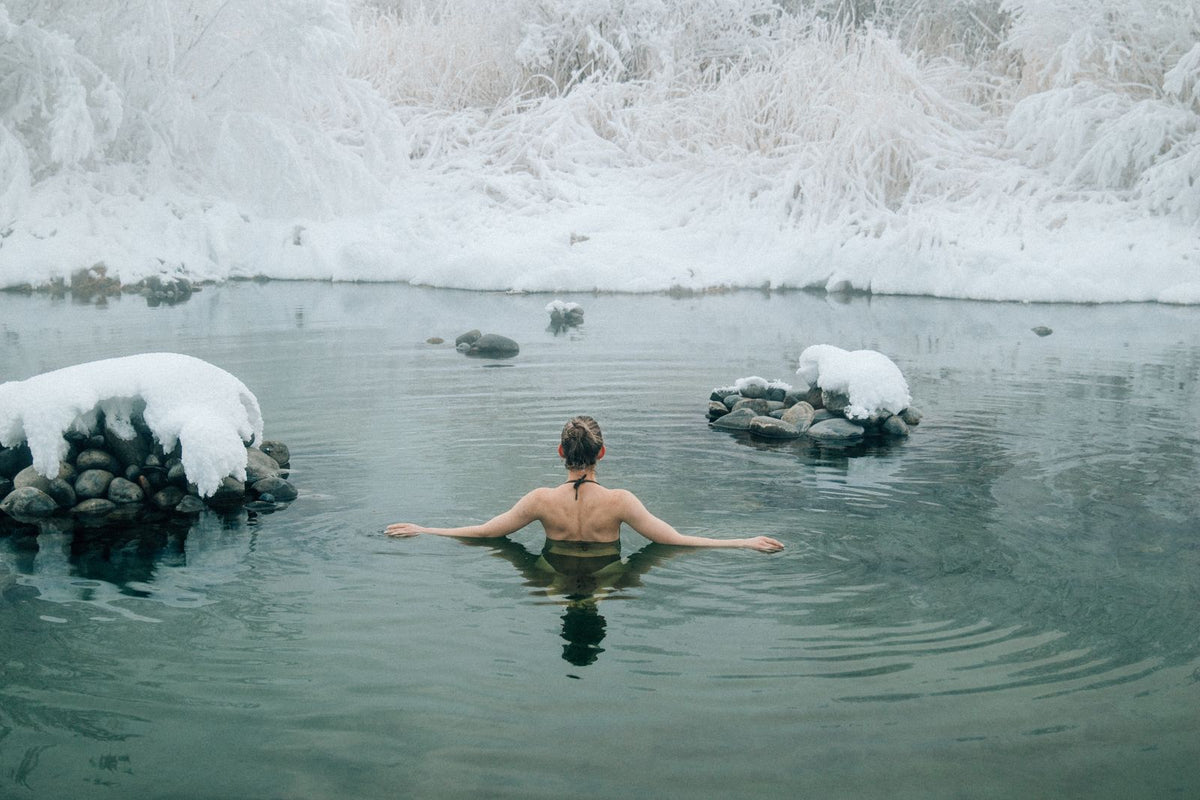


You see a footballer immersed up to the neck in an ice bath, someone coming out of a chamber filled with white mist at well over a hundred degrees below zero, or your brother-in-law saying he now finishes his shower with cold water. All of that is called cryotherapy, and with so many videos around, it can be hard to separate what cold really does from what is pure showmanship.
Here we're talking about recovery and wellness cryotherapy: the cold chamber, cold-water bathing, and local cold applied to one area. Not the medical cryotherapy a dermatologist uses to remove warts, which is something else. You'll learn what it is, which benefits are supported by evidence and which are not, what risks there are, and who should not try it; at the end, you'll have your first cold protocol.
| Type of cryotherapy | Temperature | Duration | Where it takes place |
|---|---|---|---|
| Whole-body chamber | Dry air at approximately -110 / -140 °C | 2-3 min | Center, with supervision |
| Partial-body chamber (head out) | Nitrogen vapor, below -100 °C | 2-3 min | Center, with supervision |
| Cold-water bath (cold plunge) | Water at 8-15 °C | 2-10 min | At home or at a center |
| Localized cold | Ice, gel, or cold packs | 10-20 min | At home |
| Medical cryotherapy | Liquid nitrogen on the lesion | Seconds | Dermatologist (not covered in this article) |
Your first cold protocol
Tell us where you're starting from, what you want it for, and what cold options you have available. We'll give you a temperature, duration, and frequency to get started.

What is cryotherapy
Cryotherapy means using cold in a controlled way to trigger a response in the body. The word comes from the Greek: “cryo,” cold, and “therapy.” What changes from one technique to another is how cold it is, how long it lasts, and how much skin it covers.
When cold touches the skin, three things happen almost at the same time. The blood vessels at the surface close (vasoconstriction) to protect the heat at the body's core. The nerves in the area conduct signals more slowly, which is why cold relieves pain. And the nervous system releases noradrenaline, the alertness hormone responsible for that feeling of being completely awake when you come out. As you warm up again, the vessels reopen and blood returns to the area.
That fact explains almost everything else. In a chamber, the air is very cold, but it is dry and conducts heat poorly: the skin cools significantly and quickly, but the muscle barely does. In cold water, at much less extreme temperatures, the cold reaches deeper because the water continuously draws heat away from you.

Types of recovery cryotherapy
Whole-body cryotherapy chamber
You enter a chamber with dry air cooled below -100 °C, wearing a swimsuit, gloves, socks, dry footwear, and protection for your ears and mouth. The session lasts 2 to 3 minutes and always takes place with center staff present. There is also a partial-chamber version in which the head remains outside and the cold is produced using nitrogen vapor.
The sensation is of intense cold on the skin, but it is bearable thanks to the dry air. What it does not achieve is cooling the muscle as much as water does.
Cold-water bath or cold plunge
You immerse yourself up to your neck, or up to your hips if you’re only looking for leg relief, in water between 8 and 15 °C for a few minutes. It is the most extensively studied form of cryotherapy in sports and the only one you can do regularly at home. If you’re interested in this specific format, you’ll find an explanation of why it has become so popular in cold plunge: recover like a professional without leaving home.
Localized cold
Ice, gel packs, or cold compresses applied to a specific area: a twisted ankle, an overworked knee, or a bump. Apply for 10 to 20 minutes, always placing a cloth between the ice and your skin. This is the oldest use of cold and the one that works best for reducing swelling in a specific area during the first few hours. If the problem is your knee, in knee braces with cold and heat you’ll see when to use each one.
Benefits of cryotherapy: what is supported and what is not
This is where the most exaggeration occurs. Cold therapy has real effects, but not all the ones attributed to it. Here is the honest picture:
| What people say | What we know | Evidence |
|---|---|---|
| Less muscle soreness | It reduces muscle soreness in the days following intense exertion and the feeling of fatigue. The effect is moderate; it does not make them disappear. | Good |
| Reducing swelling in an area | Local cold therapy after a blow or sprain reduces swelling and pain during the first few hours. | Good |
| More energy and better mood | The rise in noradrenaline produces a clear feeling of alertness and improved mood for hours. Many people notice it from the first session. | Moderate |
| Better sleep | Some people notice it, especially after training. The evidence is still limited. | Limited |
| Weight loss | The body uses a little more energy to maintain warmth, but not much. It does not replace a healthy diet or exercise. | Weak |
| Defenses | There is some interesting evidence, but not enough to say that it prevents colds. | Weak |
The strongest benefit, relief from muscle soreness, fits with what cold therapy does: reducing perceived pain and swelling after exertion. It is another tool in recovery, alongside sleep, nutrition, and properly measured training load; you have it all laid out in muscle recovery.
The nuance almost nobody mentions: cold therapy and muscle growth
If you strength-train to build muscle, timing matters. Regularly getting into cold water right after lifting weights may reduce some long-term gains in muscle mass and strength. The reason is simple: the inflammation that cold therapy calms is also part of the signal telling the muscle it needs to grow.
This does not mean that cold and strength are incompatible. It means separating them: leave several hours between strength training and cold therapy, or save it for rest, cardio, or competition days, when your aim is to feel fresh the next day.
Risks of cryotherapy
When done properly, cryotherapy is safe for most healthy people. The risks almost always come from going too cold, staying in too long, or being overconfident:
- Cold shock. In the first minute in cold water, the body reacts with an involuntary gasp, rapid breathing, and a sudden rise in pulse and blood pressure. That is why you enter slowly and never put your head in all at once.
- Hypothermia. Extending the bath beyond the recommended time lowers your body temperature. It may continue falling for a while after you get out, so warm up with dry clothes and gentle movement.
- Cold burns. In chambers, if the skin is damp, if there is sweat, or if the hands, feet, and ears are not protected. With localized cold, if ice touches the skin directly or is left on too long.
- Lack of oxygen in nitrogen cabins. Nitrogen displaces oxygen. That is why they should only be used with center staff present and never alone.
- Dizziness or fainting. More likely on an empty stomach, after drinking alcohol, or if you stand up suddenly when getting out.
Contraindications: who should not do it without consulting a doctor
Intense cold places significant demands on the heart and circulation for several minutes. If you fall into any of these categories, speak with your doctor beforehand:
| Condition | Why |
|---|---|
| Heart disease, arrhythmias, or a previous heart attack | Cold shock abruptly raises your heart rate and blood pressure. |
| Uncontrolled high blood pressure | Vasoconstriction raises it during exposure. |
| Raynaud's disease | The fingers respond to the cold by excessively restricting circulation. |
| Cold urticaria or cryoglobulinemia | The cold triggers reactions in the skin or blood. |
| Pregnancy | There is not enough safety data. |
| Diabetes with loss of sensitivity or neuropathy | You may not notice when the cold starts causing damage. |
| Open wounds or skin infections | In shared baths, hygiene is another consideration. |
For minors, the decision should be made by a pediatrician. And if you take medication for your heart or blood pressure, mention it too, because it may change how your body responds to the cold.
Chamber or cold plunge: how they differ
Both are forms of cryotherapy, but they do not do the same thing. The question is not which is better, but what you are looking for and how often you will do it.
| Chamber | Cold-water plunge | |
|---|---|---|
| Temperature | -110 to -140 °C, dry air | 8-15 °C, water |
| How far the cold reaches | Mostly the skin | Skin and muscles |
| Sensation | Intense but brief and dry | It demands more from you at first; the first minute is the difficult part |
| Duration | 2-3 min | 2-10 min depending on the temperature |
| Where | Only at a center, by appointment | At home or at a center |
| Who it's suitable for | Occasional use, curiosity, or for those who cannot tolerate cold water | Regular use, post-workout recovery |
If you are going to use cold occasionally, a center's chamber is fine. If you want to make it part of your routine, two or three times a week, what matters is having it readily available, and that's where an at-home cold plunge wins.

How to get started without overdoing it
The typical mistake is starting with what you see on social media: water at 3 °C for ten minutes. The body adapts to cold, but it adapts little by little. For the first few weeks:
- Start lukewarm. Between 14 and 15 °C is already genuinely cold if you're not used to it.
- Keep it to a few minutes. One or two at first. The goal is to get used to it, not to endure it.
- Control your breathing. Get in slowly and breathe slowly, exhaling for longer. Once your breathing calms down, your body has gotten through the worst of it.
- Get out before you start shivering hard. If your hands or feet go numb, you feel dizzy, or you can't control your breathing, get out.
- Have someone with you the first few times. Especially if you're using water.
Over the weeks, you can lower the temperature by a couple of degrees or add a minute or two, but never both at once. The times and temperatures for each stage, and whether to use it before or after training, are in the cold plunge usage guide.

Wellbeinn Cryo Bath
Controlled cold-immersion tub for cryotherapy at home. Temperature from 3 to 42 °C and app control. Available in two versions: Essential, compact, and Elite, larger for intensive use.
View productWhat a tub with adjustable temperature offers over an ice bath is repeatability: you know that today you're at 12 °C, just as you were on Tuesday, and you can lower the temperature degree by degree instead of adding ice by eye. And because it also heats, you can use it to alternate between cold and heat.
Frequently asked questions
For recovery and well-being, especially to reduce muscle soreness and the feeling of fatigue after intense exertion, reduce swelling in a specific area and, in the short term, feel more alert and in a better mood. It is not a treatment for any disease.
Whole-body treatments use dry air at around -110 to -140 °C. It sounds extreme, but dry air conducts heat poorly, which is why it can be tolerated for two or three minutes. A cold-water bath, on the other hand, is done at between 8 and 15 °C.
In a chamber, 2 to 3 minutes maximum. In a cold-water bath, from 1-2 minutes at first to 5-10 minutes once you're adapted, depending on the temperature: the colder it is, the shorter the session. For local cold therapy, 10 to 20 minutes with a cloth in between.
To start, two or three times a week is enough. If you're already adapted, you can do it daily if it feels right, although most effects are noticeable with three or four sessions a week. If you do strength training, keep cold exposure separate from weightlifting.
Very little. The body uses slightly more energy to maintain its temperature, but the difference is small and does not change your weight on its own. If you want to reduce fat in a specific area using cold, that is cryolipolysis, a different cosmetic treatment.
Reddened skin, tingling, and feeling cold for a while are normal. The real risks arise from overdoing it: cold burns in chambers or from direct contact with ice, hypothermia if you prolong the bath, and dizziness or problems in people with heart disease or uncontrolled high blood pressure.
Anyone with heart disease, uncontrolled high blood pressure, Raynaud's disease, cold urticaria, or cryoglobulinemia; pregnant people; and anyone with reduced skin sensitivity. In all these cases, consult a doctor first. For minors, consult a pediatrician.
An ice bath is a type of cryotherapy involving immersion in cold water. Cryotherapy also includes cold-air chambers and local cold therapy. The temperature, duration, and even how deeply the cold reaches into the body vary.
For recovery, use it afterward, in the hours following exertion. Before training, it cools the muscle and may reduce performance. If your goal is to build muscle, do not do it immediately after weight training: wait several hours or use it on rest days.
No. Wart treatment is a medical procedure that applies liquid nitrogen to the lesion to destroy it, and it is performed by a dermatologist or your doctor. Recovery cryotherapy exposes the body or an area to controlled cold for a few minutes, without destroying tissue.
In summary
Recovery cryotherapy is controlled cold: in a chamber, in water, or applied to an area. The best-supported benefits are the more modest ones: less soreness, less swelling, and a good mood boost. Almost all its risks can be avoided by starting with moderate temperatures, limiting sessions to a few minutes, and taking the contraindications into account.
If you want to try the format most commonly used in sports, start with the cold plunge guide, and if you want to have it at home with the temperature under control, take a look at the Wellbeinn Cryo Bath.
It is not an ice miracle. It is physiology, at the right dose.
Redacción y revisión del artículo
Share:
Professional pressotherapy vs. at-home: the real differences