


You get up feeling as though you slept terribly. You remember looking at the clock at three, then again at four thirty, and you're convinced you could only have slept five hours at most. You tell anyone who asks. And you genuinely believe it.
Well, that may not be the case. Feeling that you sleep badly is not the same as sleeping badly, and science has long shown that what we remember from the night and what actually happens do not always match. A study published this year has measured it again, and the results have quite a bit to tell you, whether you think you sleep too little or think you get enough sleep.
| What was measured | Result | What it means |
|---|---|---|
| Sleep they reported getting | 6.3 hours on average | Everyone thought they slept seven hours or less |
| Sleep measured by actigraphy | 6.8 hours on average | Half an hour more than they thought |
| Those who actually slept less than 7 hours | 54,4 % | Almost half slept more than they thought |
| Average difference | 29 minutes | They underestimated their sleep; they did not overestimate it |
| Who was most mistaken | The most stressed participants | Those who also took longer to fall asleep and woke up more often |
Baron KG et al., Journal of Clinical Sleep Medicine, 2026. 195 adults from the United States with elevated blood pressure, measured using wrist actigraphy.
How many hours should you sleep?
Before getting to the study, let's look at the reference point. Because to know whether you sleep too little, you first need to know what too little means.
The joint consensus of the American Academy of Sleep Medicine and the Sleep Research Society recommends that adults sleep seven or more hours on a regular basis. Consistently getting less than seven hours is associated with worse health outcomes. And the National Sleep Foundation established age-based ranges that are used as a reference worldwide.
| Age | Recommended hours | Source |
|---|---|---|
| 18 to 25 years | 7 to 9 hours | National Sleep Foundation |
| 26 to 64 years | 7 to 9 hours | National Sleep Foundation |
| 65 years or older | 7 to 8 hours | National Sleep Foundation |
| Any adult | 7 hours or more | AASM and Sleep Research Society |
Hirshkowitz M et al., Sleep Health, 2015. Watson NF et al., Sleep, 2015.
Notice that the figure is seven or more, not eight. Eight is a round number that has stuck in the public imagination. And both references acknowledge that the real need varies from person to person.
What the 2026 study discovered
The study was published in May 2026 by a team of researchers in the Journal of Clinical Sleep Medicine, the journal of the American Academy of Sleep Medicine. And it is worth saying from the outset who they studied, because that is important for understanding the results.
They were 195 adults from the United States, aged 18 to 65, with an average age of 42, who volunteered for a study on extending sleep. All said they slept seven hours or less. And all had somewhat elevated blood pressure, generally without other significant health problems. It is not a representative sample of the entire population, and the authors themselves make that clear.
Each person was fitted with a wrist actigraph, a device that estimates sleep based on movement, and the researchers compared how long they said they slept with what the device recorded.
This is the result that opens the article. They said they slept an average of 6.3 hours, while the actigraph recorded 6.8. Only 54.4% actually slept less than seven hours. The rest, almost half, slept enough or more, even though they were convinced otherwise. On average, they underestimated their sleep by 29 minutes.
Who is more likely to get it wrong, and why
Here is the most interesting thing about the study. The underestimation was not random. It was greater in people with higher perceived stress and more sleep disturbances.
And there was another pattern that makes a lot of sense when you think about it. Those who took longer to fall asleep and woke up more often during the night underestimated their sleep more. In other words, they are not making it up. Nights with more periods of wakefulness are remembered as worse than they were, because those periods stick in the memory and the actual sleep does not.
The authors’ conclusion is straightforward. To know whether someone is genuinely sleeping too little, it needs to be measured; simply asking them is not enough. Stress and a more restless night can intensify the feeling of not having slept.
The criticism worth knowing
And now for something you will not read in almost any other place, but that makes the article more honest.
In July 2026, two researchers from Pakistan, Ahad Wali Khan and Aisha Riaz, published a letter to the editor in the same journal questioning part of the study. Their argument is this. Actigraphy tends to overestimate sleep compared with polysomnography, the reference test in a sleep laboratory. The reason is that an actigraph does not distinguish well between being asleep and being awake but still. And in stressed people, who may spend periods like that in bed, some of those 29 minutes could be measurement error rather than the person’s.
Khan AW, Riaz A, letter to the editor, Journal of Clinical Sleep Medicine, July 2026. Response by Baron KG and Landvatter J, August 2026.
Does it disprove the study? No. The letter itself acknowledges that the authors had already warned that actigraphy is not absolute truth, and the researchers from the original study published a response to the letter in August. But it does require reading the result with caution. The conclusion that holds is that perception and measurement do not match, and that the difference is greater when there is more stress. How much of that difference comes from the person and how much from the device is less clear.
The opposite error: sleeping too little without noticing
So far, the good news. Many people sleep more than they think. But perception also fails in the opposite direction, and this error is more dangerous.
It is one of the most frequently cited experiments in sleep science. A team from the University of Pennsylvania, in a study published in the journal Sleep in 2003, had a group of healthy adults sleep 4, 6, or 8 hours for 14 consecutive days, and measured their cognitive performance each day.
Those who slept 4 and 6 hours accumulated impairment that grew day by day. Those who slept 6 hours or less reached an impairment equivalent to up to two consecutive nights without sleep.
And here is the key finding. Their perception of sleep barely changed. They noticed the impact during the first few days, but afterward their reported sleepiness barely increased, and it did not distinguish between those who slept 6 hours and those who slept 4. Their performance continued to decline, but they did not notice it.
Van Dongen HPA, Maislin G, Mullington JM, Dinges DF, Sleep, 2003.
Signs that you are not sleeping well and what restorative sleep is
"Restorative sleep" is an expression everyone uses and that has no single clinical definition. The closest thing is the work of an expert panel from the National Sleep Foundation, which reviewed 277 studies and published indicators of good-quality sleep in 2017.
| Indicator | Good quality in adults | What it is |
|---|---|---|
| Time to fall asleep | 15 minutes or less | 16 to 30 minutes is also considered appropriate |
| Prolonged awakenings | One or none | Awakenings lasting more than 5 minutes. For older adults, up to two |
| Time awake during the night | 20 minutes or less | Total time awake after falling asleep |
| Sleep efficiency | 85% or more | The percentage of time in bed that you spend asleep |
Ohayon M et al., National Sleep Foundation's sleep quality recommendations, Sleep Health, 2017.
Pay attention to one thing that says a lot. The panel reached agreement on these four indicators of continuity, but did not reach consensus on sleep stages, such as deep sleep or REM, as indicators of quality. So if an app tells you that you have had little deep sleep, do not jump to conclusions.
The nighttime indicators are joined by what you notice during the day. Habitually waking up tired, having trouble concentrating, or needing to sleep much more on days off are signs worth keeping in mind.
A home test to find out whether you are getting too little sleep
We prepared this questionnaire based on the indicators above. It is not a validated clinical scale and cannot be used to diagnose anything. It is a way to look more closely at your nights. Answer with the last two weeks in mind.
Are you getting too little sleep? Six questions
Count how many times you answer yes.
- Do you sleep less than seven hours on most nights?The consensus reference from the AASM and the Sleep Research Society is seven or more.
- Do you take more than 30 minutes to fall asleep on most nights?Up to 30 minutes is considered appropriate for adults.
- Do you wake up more than once a night for more than five minutes? If you are 65 or older, more than twice.One or no prolonged awakenings is usual in good-quality sleep.
- If you spend eight hours in bed, do you estimate that you spend more than about 70 minutes awake in total, including the time it takes you to fall asleep?That amounts to an efficiency below 85%.
- Do you wake up tired most mornings, even though you have spent enough time in bed?It is a sign that something is not working, although it does not say what.
- Do you sleep quite a bit more on days off than on workdays?If you need to catch up, you may not be getting enough sleep during the week.
Two or three. It’s worth paying closer attention to your nights for a few weeks.
Four or more. It’s worth reviewing your schedule and habits, and if it lasts more than three months or affects you during the day, discuss it with your doctor.
How to know how many hours I really sleep
If perception can fail in both directions, the only way to know for sure is to measure it. In a sleep laboratory, this is done with polysomnography, which records brain activity and is the reference standard. At home, the realistic option is a sleep and activity tracker.
Are they reliable? For what matters here, reasonably so. A study that compared seven consumer devices with polysomnography concluded that they performed well at detecting sleep, and that most matched or outperformed actigraphy, which is precisely the technique used in the 2026 study. Where they fall short is in sleep stages, because they estimate them without reading the brain.
Chinoy ED et al., Sleep, 2021.
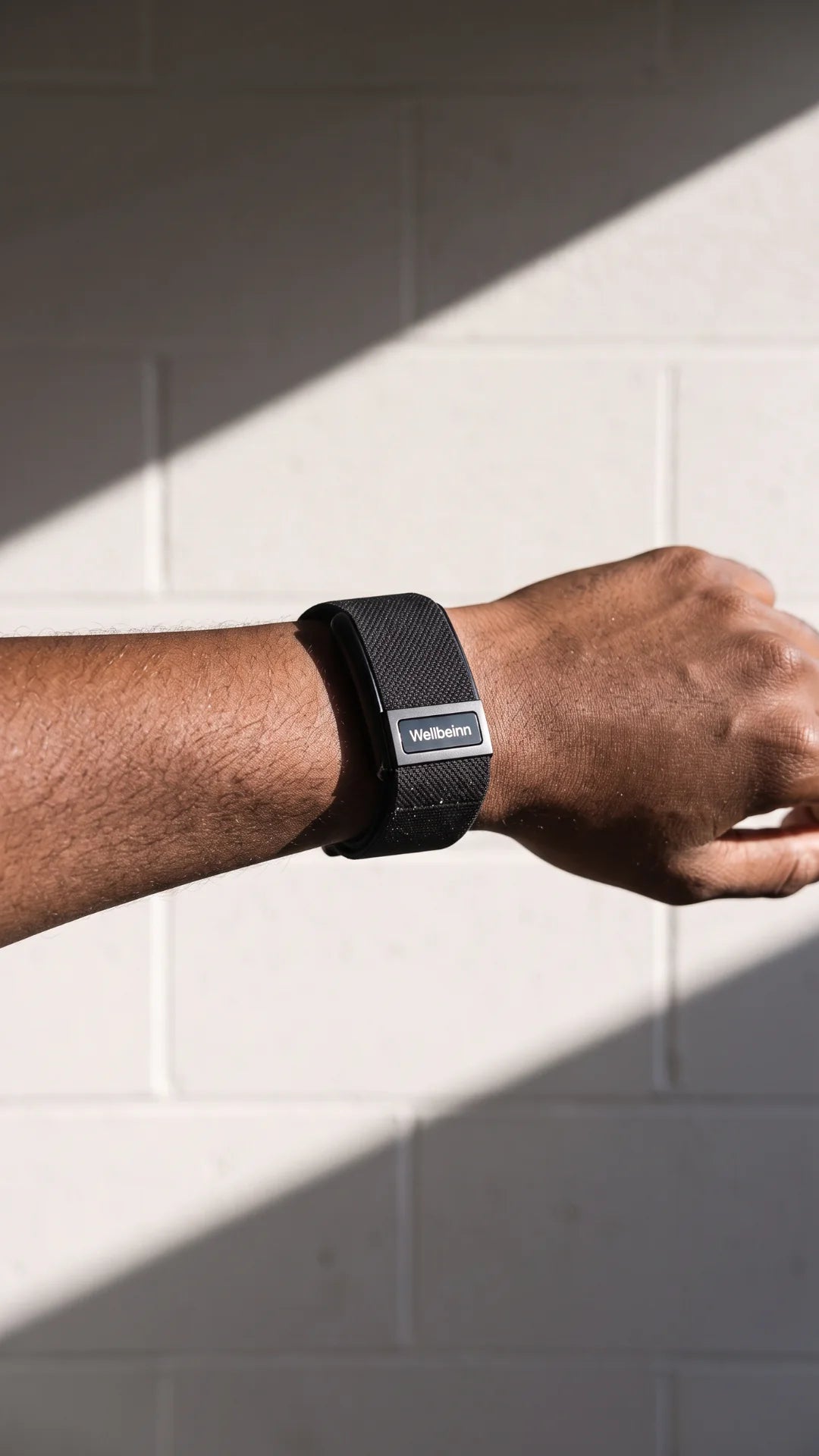
That’s what the Wellbeinn Band does together with the Wellbeinn Mate app. The Band measures your night, and Mate interprets it. What’s interesting is that the app shows you exactly the quality indicators you’ve just seen.
| What the app shows you | What it’s useful for |
|---|---|
| Your sleep each night | The actual hours, and the last seven nights compared with your goal |
| How long it took you to fall asleep | Comparing it with how long you think it takes you |
| How many times you woke up | Knowing whether those awakenings you remember really happened that often |
| Sleep efficiency | With the 85% reference marked on screen |
| Your internal clock | Whether your schedule is aligned with or working against your biological clock |
Two things worth knowing from the outset, for the sake of honesty. The Band also estimates, just like the study’s actigraph, so trust the trend over several weeks more than a single night. And the app needs a few days to learn what’s normal for you, so the first figures are only indicative.
And one note we think is important. A phenomenon described in 2017 called orthosomnia involves people whose sleep worsened because they became obsessed with their tracker’s numbers. If looking at your data makes you anxious, stop checking it for a few days. How you feel during the day matters just as much as the score.

Wellbeinn Band
Screen-free activity and sleep tracker with 12 days of battery life, so you don’t have to take it off every night. It measures your night, and Wellbeinn Mate interprets it, including how long it takes you to fall asleep, awakenings, and sleep efficiency. One-time payment, no subscription.
175,00 €
View Wellbeinn BandThe Band, together with the Wellbeinn Balance scale, is part of the measurable health collection.
If your sleep routine is what’s not working
If measuring reveals that you really are sleeping too little, the next step is your habits. And it’s worth knowing which ones are supported by evidence.
What helps most is keeping a regular schedule, especially your wake-up time, including on weekends. Use the bed only for sleeping, and if you don’t fall asleep after a while, get up and do something quiet in dim light. Watch your caffeine intake in the afternoon and alcohol at night, because alcohol helps you fall asleep but fragments the second half of the night. And take a warm shower or bath one or two hours before bed, which a meta-analysis of 17 studies associated with falling asleep about ten minutes earlier.
As support for your nighttime routine, the Night Recovery Pack combines Magnesium Matrix and liquid Melatonin with B6. European regulations allow the claim that melatonin helps reduce the time needed to fall asleep, with an intake of 1 mg shortly before going to bed. It’s a support, not a sleeping pill or a substitute for fixing your schedule.

Night Recovery Pack
Magnesium Matrix (60 tablets, 30 days) and liquid Melatonin B6 (50 ml, 50 doses). Melatonin helps reduce the time needed to fall asleep, with 1 mg taken shortly before bedtime.
39,90 €
View the packThe essentials in five lines
Frequently asked questions
How many hours should you sleep?
Adults should regularly get seven or more hours, according to the consensus of the American Academy of Sleep Medicine and the Sleep Research Society. The National Sleep Foundation specifies 7 to 9 hours between ages 18 and 64, and 7 to 8 hours from age 65 onward. The figure of eight hours for everyone is a simplification, and both references acknowledge that the need varies from person to person.
How many hours am I actually sleeping?
Probably not the ones you think. In a 2026 study of adults who said they slept less than seven hours, actigraphy showed that they slept an average of 29 minutes more than they thought, and only 54% actually slept less than seven hours. The difference was greater in people who were more stressed. The only way to know is to measure it over several weeks, for example with a sleep tracker, and focus on the trend rather than a single night.
What are the signs that I am not sleeping well?
At night, taking more than 30 minutes to fall asleep, waking up more than once for longer than five minutes, spending more than 20 minutes awake in total, or being asleep for less than 85% of the time you spend in bed. These are the quality indicators defined by a 2017 National Sleep Foundation panel. During the day, regularly waking up tired, having trouble concentrating, or needing to sleep much more on days off. None of these signs is a diagnosis, but if they persist over time, they are worth paying attention to.
What is restorative sleep?
There is no single clinical definition. The closest thing is the quality indicators from the 2017 National Sleep Foundation panel, which, after reviewing 277 studies, agreed on four criteria for adults: falling asleep within 15 minutes or less, at most one awakening lasting more than five minutes, being awake for 20 minutes or less during the night, and sleep efficiency of 85% or more. The panel did not reach a consensus on sleep stages as an indicator, so having little deep sleep in an app does not by itself mean that your sleep is not restorative.
What happens when you sleep too little?
Performance drops and impairment accumulates. In a classic experiment published in 2003, healthy adults who slept 6 hours or less for 14 days accumulated cognitive impairment equivalent to up to two consecutive nights without sleep. Most strikingly, their sense of sleepiness barely changed, so they were unaware of what they were losing. In the long term, consistently sleeping less than seven hours is associated with worse health outcomes.
What happens to your brain if you don’t get enough sleep?
The best-studied effects are on attention and cognitive performance. In the 2003 experiment, impairment grew day by day with each night of short sleep, with more lapses in attention and poorer performance on all tasks. And in a British cohort of nearly 8,000 people followed for about 25 years, sleeping six hours or less at ages 50 and 60 was associated with a higher risk of dementia than sleeping seven hours. It’s an association, and the authors warn that short sleep could also be an early sign rather than solely a cause.
What happens if I sleep only 3 hours a day?
We don’t know of any experiments that kept people at 3 hours of sleep for days, because that wouldn’t be ethical. The most extreme condition in the classic 2003 study was 4 hours for 14 days, and it produced greater cumulative cognitive impairment than 6 hours, which was already equivalent to up to two nights without sleep. With 3 hours, it’s reasonable to expect an even more pronounced effect. If it’s an isolated occurrence, prioritize recovery and avoid driving or risky tasks. If it’s habitual, discuss it with your doctor.
Why do I sleep for only 3 hours and wake up?
There can be many causes, and we can’t know which one applies to you. Some common ones are stress, alcohol, which can help you fall asleep but fragments the second half of the night, and irregular schedules. It’s also worth remembering that briefly waking up during the night is normal and that, according to the 2026 study, nights with awakenings are remembered as worse than they were. If it happens to you at least three nights a week for three months and affects you during the day, it’s time to consult your doctor.
Is it better to sleep too little or not sleep at all?
Getting some sleep is better than getting none. In the classic 2003 study, total sleep deprivation produced disproportionately large impairment relative to the number of hours lost. But that doesn’t mean that regularly getting too little sleep is harmless, because the deficit accumulates and the person experiencing it may not notice. If you have to choose for one particular night, a few hours is better than none.
Is it normal not to sleep for 24 hours and not feel sleepy?
It can happen, and it doesn’t mean you’re well rested. Feeling sleepy isn’t a good indicator of how much sleep deprivation is affecting you. In the 2003 experiment, people who slept little noticed the impact at first, but then their sleepiness barely increased while their performance continued to decline. In addition, your biological clock can make you feel more awake at certain times even if you’ve gone a long time without sleeping. Not feeling sleepy doesn’t mean you don’t need sleep.
Which hormone keeps you from sleeping?
There is no single hormone to blame. Melatonin is produced mainly in darkness and helps signal to the body that it is nighttime. And light affects it more than you might think. In a 2011 study of 116 young adults, normal room light in the hours before bedtime delayed melatonin onset in 99% of participants and shortened its production by about 90 minutes compared with dim light. The important nuance is that light delays and shortens it; it does not eliminate it. Stress activates mechanisms that keep the body on alert and make it harder to fall asleep, and the 2026 study found that stress also distorts your perception of how much you sleep. If you think you have a hormonal problem, discuss it with your doctor, not a wearable or a supplement.
What does science say about sleep?
Three things are well supported. Adults need seven hours or more on a regular basis. Sleep quality can be assessed using specific indicators, such as how long it takes to fall asleep, awakenings, and sleep efficiency. And our perception of how much we sleep is unreliable, because it fails both by underestimating sleep during times of stress and by failing to notice the deterioration when we truly sleep too little. That is why there is increasing emphasis on measuring rather than relying on how you feel.
What does neuroscience say about dreams?
The most vivid, story-like dreams are associated mainly with REM sleep, although dreaming also occurs during other stages. Exactly what dreams are for remains a subject of debate in neuroscience. What is worth knowing is that a consumer wearable cannot tell whether you have dreamed, because it estimates sleep stages from movement and pulse, not brain activity.
What are 5 habits for sleeping well?
Keep a regular schedule, especially your wake-up time. Use the bed only for sleeping, and get up if you don't fall asleep after a while. Watch your caffeine intake in the afternoon and alcohol at night. Take a warm shower or bath one or two hours before going to bed. And stay active during the day. That said, the American Academy of Sleep Medicine guidelines recommend not using sleep hygiene as the sole treatment for chronic insomnia; cognitive behavioral therapy is the first-line treatment.
What vitamin are you lacking when you can't sleep?
In the vast majority of cases, none. Framing insomnia as a vitamin deficiency can delay effective treatment. As for magnesium, the available review found only three trials involving 151 older adults, and the authors concluded that the quality of the evidence was poor. There is one exception: restless legs syndrome, the need to move your legs that worsens at rest and at night, for which guidelines recommend checking ferritin levels. If that sounds familiar, discuss it with your doctor.
Is a sleep wristband reliable?
To reasonably distinguish when you are asleep and when you are awake, yes. A study comparing seven consumer devices with polysomnography concluded that they performed well at detecting sleep. Where they fall short is in detecting sleep stages. Any wristband, including the Wellbeinn Band, estimates this from body signals, so what is useful is the trend over several weeks with the same device.
Sources and references (15)
Sleep perception (4)
- Baron KG, Landvatter J, Wilson A, et al. Actigraphic estimates of sleep duration in those reporting sleeping less than 7 h. J Clin Sleep Med. 2026;22(1):83. doi.org/10.1007/s44470-026-00072-0
- Khan AW, Riaz A. Limitations in study of actigraphic estimates of sleep. Letter to the editor. J Clin Sleep Med. 2026;22(1):112. doi.org/10.1007/s44470-026-00132-5
- Baron KG, Landvatter J. Reply to «Limitations in study of actigraphic estimates of sleep». J Clin Sleep Med. 2026;22(1):136. doi.org/10.1007/s44470-026-00136-1
- Van Dongen HPA, Maislin G, Mullington JM, Dinges DF. The cumulative cost of additional wakefulness, dose-response effects on neurobehavioral functions and sleep physiology from chronic sleep restriction and total sleep deprivation. Sleep. 2003;26(2):117-126. doi.org/10.1093/sleep/26.2.117
Sleep duration and quality (3)
- Watson NF, Badr MS, Belenky G, et al. Recommended amount of sleep for a healthy adult, a joint consensus statement of the AASM and Sleep Research Society. Sleep. 2015;38(6):843-844. doi.org/10.5665/sleep.4716
- Hirshkowitz M, Whiton K, Albert SM, et al. National Sleep Foundation's sleep time duration recommendations, methodology and results summary. Sleep Health. 2015;1(1):40-43. doi.org/10.1016/j.sleh.2014.12.010
- Ohayon M, Wickwire EM, Hirshkowitz M, et al. National Sleep Foundation's sleep quality recommendations, first report. Sleep Health. 2017;3(1):6-19. doi.org/10.1016/j.sleh.2016.11.006
Health, habits and treatment (5)
- Sabia S, Fayosse A, Dumurgier J, et al. Association of sleep duration in middle and old age with incidence of dementia. Nat Commun. 2021;12:2289. ncbi.nlm.nih.gov/pmc/articles/PMC8058039
- Gooley JJ, Chamberlain K, Smith KA, et al. Exposure to room light before bedtime suppresses melatonin onset and shortens melatonin duration in humans. J Clin Endocrinol Metab. 2011;96(3):E463-E472. doi.org/10.1210/jc.2010-2098
- Edinger JD, Arnedt JT, Bertisch SM, et al. Behavioral and psychological treatments for chronic insomnia disorder in adults, an American Academy of Sleep Medicine clinical practice guideline. J Clin Sleep Med. 2021;17(2):255-262. doi.org/10.5664/jcsm.8986
- Haghayegh S, Khoshnevis S, Smolensky MH, Diller KR, Castriotta RJ. Before-bedtime passive body heating by warm shower or bath to improve sleep, a systematic review and meta-analysis. Sleep Med Rev. 2019;46:124-135. doi.org/10.1016/j.smrv.2019.04.008
- Mah J, Pitre T. Oral magnesium supplementation for insomnia in older adults, a systematic review and meta-analysis. BMC Complement Med Ther. 2021;21:125. doi.org/10.1186/s12906-021-03297-z
Devices and regulations (3)
- Chinoy ED, Cuellar JA, Huwa KE, et al. Performance of seven consumer sleep-tracking devices compared with polysomnography. Sleep. 2021;44(5):zsaa291. doi.org/10.1093/sleep/zsaa291
- Baron KG, Abbott S, Jao N, Manalo N, Mullen R. Orthosomnia, are some patients taking the quantified self too far? J Clin Sleep Med. 2017;13(2):351-354. doi.org/10.5664/jcsm.6472
- Commission Regulation (EU) No 432/2012 of 16 May 2012 on authorised health claims made on foods. boe.es
Redacción y revisión del artículo
Share:
Exoskeleton: what it is, types, and who each one is for
How much does cryotherapy cost: center vs. at-home cold plunge