
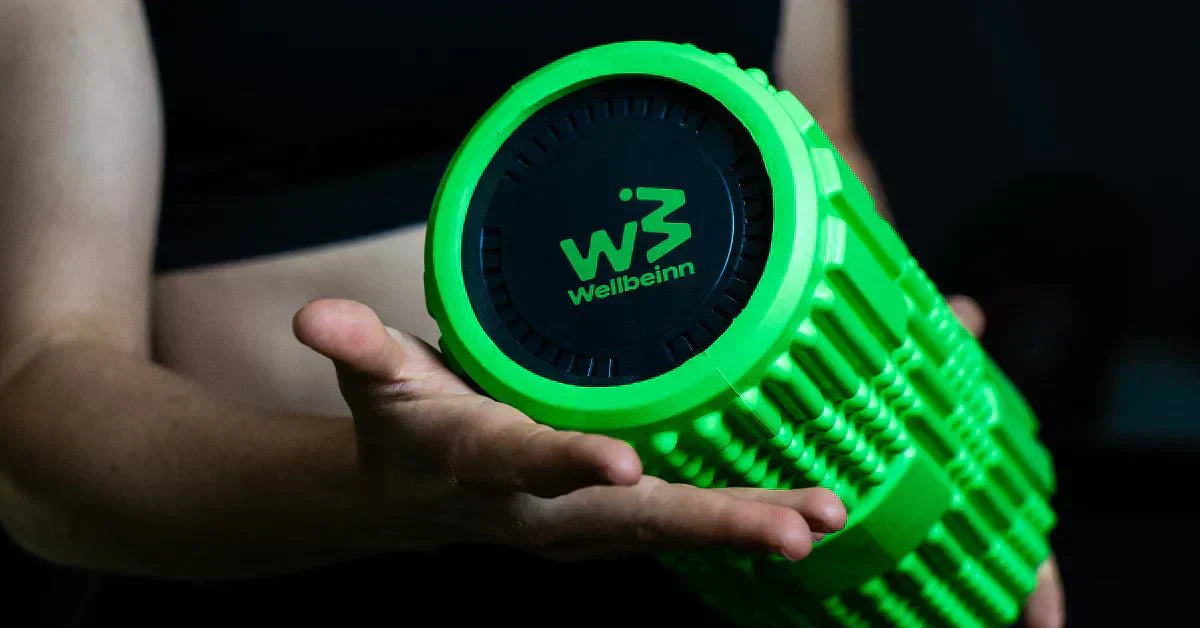


It may have happened to you. You bought a foam roller, or maybe it was gifted to you months ago. It’s sitting untouched in a corner of the storage room. You know it’s good for you, you know you should use it, but every time you try to use it on the floor, you end up doing the same thing: rolling a bit on your back, making a couple of painful faces, and putting it away again.
Having the tool is the first step, but knowing how to use it is what makes the difference between having just another gadget at home or having a personal physio available 24/7.
We have prepared a guide with the best foam roller exercises, using the three key tools from our Pack Rollinn Recovery: the classic roller, the peanut, and the precision ball.
📑 In this article you will learn:
Why do you need three different shapes?
Before you start sweating, a quick clarification. Many users ask us why we sell a pack and not just the large roller. The answer lies in our body.
The body is not flat. You have curves, bones (like the spine or shoulder blades), and muscles, so we need to use different foam rollers.
- Rollinn (Classic Roller): For use on large areas like quadriceps, hamstrings, or broad back.
- Rollinn Peanut: Designed to surround the spine without touching the bone.
- Rollinn Ball: The best ally to combat trigger points (deep glute, sole of the foot).
Now that you know what each Rollinn does, let's see how we can use them.
The Wellbeinn Circuit: 5 Essential Exercises
For this routine, we recommend setting your Rollinn devices to medium vibration. The vibration will trick your nervous system to reduce the sensation of pain.
1 Upper back release
- Tool: Rollinn Peanut.
- The problem: You spend 8 hours hunched over the computer and by the end of the day your back feels tight.
- The exercise: Place the peanut on the floor and lie on your back so your spine rests right in the central groove of the device. This is vital to avoid pressing on the vertebrae. Start in the middle back area and gently roll toward the shoulders.
- The trick: When you find a tight spot, stop. Take a deep breath and let your shoulders drop back, trying to touch the floor with your shoulder blades. It’s the perfect ally against poor posture.
2 Quadriceps Release (For Runners and Cyclists)
- Tool: Rollinn (Classic roller).
- The problem: Heavy legs, feeling of heaviness when climbing stairs, or sore knees.
- The exercise: Get into a plank position on your elbows, with the roller under your thighs. Roll from the hip down to just above the knee (never on the kneecap).
- The trick: If you want more intensity, cross one leg over the other to double the pressure on the thigh that’s resting. These vibrating massage rollers make this usually intense movement much more tolerable and effective by slightly "numbing" the superficial pain signal.
3 The Glute "Reset Button"
- Tool: Rollinn Ball.
- The problem: Pain in the lower lumbar area or "false sciatica" from sitting too long or overload from running.
- The exercise: Sit on the floor with your knees bent. Place the ball under one glute (in the fleshy part, not on the bone). Cross that leg over the other (forming a "4"). Find the painful spot and hold the pressure for 30 seconds.
- The trick: Make small circles over the painful spot. The ball’s vibration will dissolve the knot much faster.
4 Core Activation and Stability (Very useful in Pilates)
- Tool: Rollinn (Classic roller).
- The problem: Lack of core stability or lower back pain due to abdominal weakness.
- The exercise: Here we enter the realm of foam roller in Pilates. Lie on your back with the roller placed lengthwise (along your entire spine, from head to sacrum). Find your balance. Alternately lift one arm and the opposite leg without falling off the roller.
- The trick: This exercise isn’t about massaging, but connecting your brain with your deep muscles. Since it’s an unstable surface, you force your abdomen to work three times harder to avoid falling. It’s active recovery, as you relieve your back while strengthening your abdomen.
5Treatment for Plantar Fasciitis
- Tool: Rollinn Ball or Peanut.
- The problem: Plantar fasciitis, tired feet after a day on your feet, or cramps.
- The exercise: Standing (or sitting if you prefer less pressure), step on the ball with the arch of your foot. Roll from the heel to the toes applying progressive pressure.
- The trick: It’s ideal to do this as soon as you get home, even before taking off your work clothes. Releasing the plantar fascia has a chain effect: it relaxes the calf and even the hamstrings.
Prefer to see these exercises in action?
We know that sometimes reading the technique isn’t enough. Speed, exact placement, and breathing are key to avoiding injury. That’s why our team has prepared a complete playlist where you can see the exact technique for these movements and many more.
If you want to make sure you’re doing it right, check out our tutorials here:
Our expert Caetano’s opinion

“The key to successful recovery is not doing a very intense session once a month, but maintaining a constant frequency. Your body appreciates daily care with tools adapted to each area much more.”
Caetano — WellbeinnIt’s not just rolling, it’s smart recovery
Incorporating these movements into your daily life doesn’t have to be a one-hour gym session. Just 10 minutes a day, while watching a Netflix series or before going to sleep, is enough.
The key to success is not intensity, but consistency and, above all, using the right tool for each area. Don’t try to massage your spine with a flat roller or your quadriceps with a small ball.
With our Rollinn Recovery Pack, you get the complete foam rollers for your body in one box. Start giving each muscle what it needs.
Redacción y revisión del artículo
Share:
Red Light Panel: The Best Investment for Your Skin and Muscles
Lipedema or cellulite, what is the difference and how can we relieve it?