
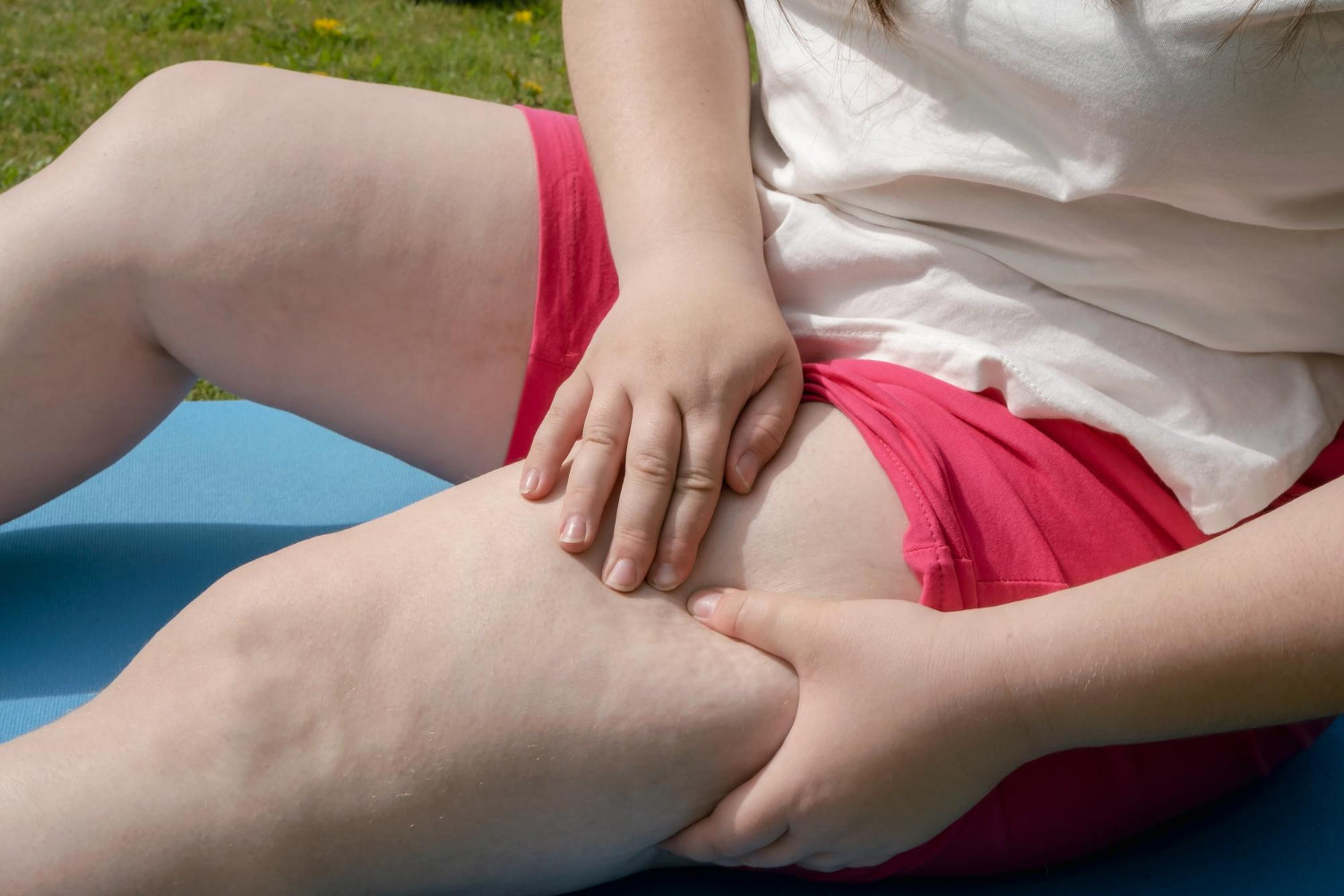


You’ve been hearing the same thing for years: "eat less, move more." Yet your legs don’t change, even though the rest of your body does respond. If that disproportion sounds familiar, and on top of that you notice your legs are painful, heavy, or bruise for no reason, it might not be "normal" fat. It could be lipedema, and detecting it early — at stage 1 — makes a big difference.
Here we explain how to recognize lipedema in its initial phase, what signs distinguish it from being overweight, and why it’s not your fault or a lack of willpower. An important warning from the start: this article helps you understand what to look for, but does not replace a medical diagnosis. A professional (angiology or vascular medicine) confirms lipedema.
| Sign of stage 1 lipedema | What you’ll notice |
|---|---|
| Skin on the outside | Still smooth and normal-looking |
| Fat underneath | Small nodules, like grains of rice |
| Distribution | Symmetrical in both legs and hips |
| The feet | Feet remain free, with a "cut" at the ankle |
| When touched | Pain, sensitivity, and easy bruising |
| With diet and exercise | That fat barely goes down |
Self-check: could it be lipedema?
Mark the signs you recognize in yourself. This is a guide, not a diagnosis.
What lipedema is (and what it isn’t)
Lipedema is an abnormal accumulation of fat, almost always in the legs and hips and sometimes in the arms, mainly affecting women and having a strong hormonal and genetic component. It’s not ordinary overweight, although for years it has been confused with it and many women are unfairly told they "just need to lose weight."
The key difference is here: lipedema fat does not respond to diet or exercise like normal fat. You can lose weight in your face, abdomen, or arms and see your legs stay the same. That’s not a lack of effort: that tissue behaves differently. Understanding this is the first step to stop blaming yourself. For the full picture, see lipedema: what it is, symptoms, and causes.
Why recognizing it at stage 1 matters so much
Lipedema progresses in stages. In stage 1, the earliest phase, the skin still looks smooth and normal on the outside, which is why it often goes unnoticed. The change is underneath: if you press, you can feel the fat with small nodules, like little grains of rice under the skin.
Detecting it here is a huge advantage. The sooner it is identified, the sooner you can manage symptoms and slow progression to stages where the skin becomes irregular and larger lumps appear. It’s not about alarm, but about naming what’s happening and acting with information instead of blindly.
Signs that distinguish it from overweight
These are the clues that, together, point to lipedema and not common fat:
Symmetry and disproportion
Lipedema is symmetrical: it affects both legs equally. It creates a striking disproportion between a thinner upper body and much larger legs and hips. This "two-part body" shape is one of the most characteristic signs.
The "cut" at the ankle
Look at the feet. In lipedema, fat accumulation stops abruptly at the ankle and the feet remain free, forming a kind of bracelet or step. This detail is very useful because it differentiates it from lymphedema, where the foot does swell. If your legs feel heavy but your feet are normal, this is an important clue.
Pain and easy bruising
Lipedema fat hurts. It is sensitive to pressure, and many people feel heaviness or discomfort by the end of the day. In addition, bruises appear easily, sometimes without recalling any injury, because the small vessels in the area are more fragile. Normal fat does not hurt or bruise like this.
Lipedema, cellulite, or lymphedema?
They are easy to confuse, so let's separate them. Cellulite (orange peel skin) is a very common and superficial phenomenon, without pain or disproportion; most women have it and it is not a disease. Lymphedema does cause foot swelling and is usually asymmetrical. Lipedema spares the foot, is symmetrical, painful, and does not improve with diet. You can find a detailed comparison at lipedema or cellulite.
How it progresses: from grade 1 onwards
Understanding the stages helps to appreciate why early detection matters so much. Broadly speaking, lipedema is described in three grades based on how the skin looks and feels:
| Grade | How the skin looks | Fat underneath |
|---|---|---|
| Grade 1 | Smooth and normal-looking | Small nodules, like grains of rice |
| Stage 2 | Irregular surface with dimples | Larger nodules, "cushion" appearance |
| Stage 3 | Marked deformities and folds | Large fat lobules |
The good news about stage 1 is twofold: it’s when the skin still looks normal and when good management can slow progression to more uncomfortable stages. Not everyone progresses, and it’s not inevitable, but the sooner it’s identified and cared for, the better your chances. That’s why this article emphasizes looking for early-stage signs.
What to do if you recognize these signs
The first and most important thing: consult a professional who knows lipedema (angiology, vascular medicine, or specialized units). A timely diagnosis gives you a plan and, above all, frees you from years of guilt about "not losing weight because you don’t want to."
From there, management relies on several pillars: anti-inflammatory diet, gentle physical activity (walking, swimming, cycling), compression, and drainage. Pressotherapy fits here as a help for daily symptoms: it activates drainage, relieves heaviness, and the feeling of heavy legs. It doesn’t cure lipedema—nothing completely "eliminates" it—but it can make the day more bearable. For lipedema, it’s key that pressotherapy also treats hips and buttocks, not just the leg, as we explain in lipedema and pressotherapy.

HighFly Pro — Pressotherapy boots + pants
Covers leg, hip, and buttock—the key area in lipedema. Helps drainage and relieves heaviness, supporting your treatment. It is not a substitute for medical advice.
View productHabits that help day to day
Beyond the treatment recommended by your professional, there are everyday habits that many people with lipedema find helpful for managing symptoms. They don’t cure anything but add up:
- Move daily, without overdoing it. Walking, swimming, or cycling activate circulation without stressing the joints. Gentle, consistent movement feels better than high-impact exercise.
- Compression. Compression stockings or garments help control heaviness and swelling throughout the day. Have a professional advise you on the type and pressure.
- Anti-inflammatory diet. Prioritizing real food, vegetables, healthy fats, and fewer ultra-processed foods doesn’t eliminate lipedema, but it helps with overall inflammation and well-being.
- Drainage and leg rest. Elevating the legs at the end of the day and using drainage (manual or with pressotherapy) relieves the feeling of heavy legs.
- Take care of the skin. Moisturizing and treating the skin gently reduces discomfort and protects it, especially if there is sensitivity.
And above all, a change in perspective: treat lipedema as what it is, a medical condition, not as a problem of willpower. That shift, besides being fair, is what usually gives room to take better care of yourself.
Frequently asked questions
In stage 1, the skin looks smooth on the outside, but when you press, you feel fat with small nodules, like grains of rice. There is usually symmetrical fat on the legs and hips, feet are free with a "cut" at the ankle, pain or sensitivity, easy bruising, and fat that doesn’t go down with diet. If you recognize several of these signs, it’s advisable to consult a professional.
Lipedema fat is symmetrical, painful to the touch, bruises easily, and spares the feet. And, above all, it does not respond to diet or exercise like common fat: you can lose weight in the rest of your body and see that your legs stay the same. It’s not a lack of effort; it’s tissue that behaves differently.
Yes, it is one of its features. Lipedema fat is sensitive to pressure, and many people feel pain, heaviness, or discomfort, especially at the end of the day. That pain, along with easy bruising, is one of the things that distinguishes it from normal fat, which does not hurt.
There is currently no cure that completely eliminates it, but it can be managed very well to slow its progression and relieve symptoms. Management combines anti-inflammatory diet, gentle exercise, compression, and drainage. Detecting it early, at stage 1, is the best way to keep it under control.
Because it doesn't depend on your habits. Lipedema has a genetic and hormonal basis, and it usually starts or worsens during puberty, pregnancy, or menopause. The fact that the fat doesn't go down despite doing things right is precisely one of its signs, not proof that you are doing something wrong.
As support, yes. Pressotherapy activates drainage, relieves heaviness and the feeling of heavy legs, which are common discomforts in lipedema. It does not cure the disease or replace medical treatment, but it can make daily life more bearable. For lipedema, it is advisable to also treat hips and buttocks, not just the leg.
To a professional who knows lipedema well: angiologists and vascular surgeons, vascular medicine specialists, or units specialized in lymphedema and lipedema. A good diagnosis confirms if it is lipedema, rules out other causes, and gives you a management plan. It also frees you from the guilt of years of diets that "didn't work."
It can progress in stages if not managed, going from smooth skin in grade 1 to more irregular surfaces and larger lumps in advanced stages. That is why early recognition is so important: good management from grade 1 helps slow progression and maintain quality of life.
No, on the contrary: gentle movement helps. Walking, swimming, or cycling activate circulation without stressing the joints and feel good. Exercise alone does not eliminate lipedema fat, but that is no reason to stop: it is part of management and improves symptoms and overall well-being.
No. Lipedema fat does not respond to diet like normal fat, so it does not disappear by eating less. An anti-inflammatory diet does help control inflammation and overall well-being, and losing weight can improve the "common" fat that adds on. But diet is supportive, not a cure.
It has a strong genetic component: it is common for several women in the same family to have it. Hormones also play a role, as it usually starts or worsens during puberty, pregnancy, or menopause. If your mother, aunt, or sister have it and you notice signs, it is another reason to consult about it.
Yes, they are one of the pillars of management. They help control heaviness and swelling throughout the day. Ideally, a professional should advise you on the type of garment and the appropriate pressure for your case, so they are comfortable and effective rather than a hindrance.
Redacción y revisión del artículo
Share:
Does the red light mask really work or is it just for show?