
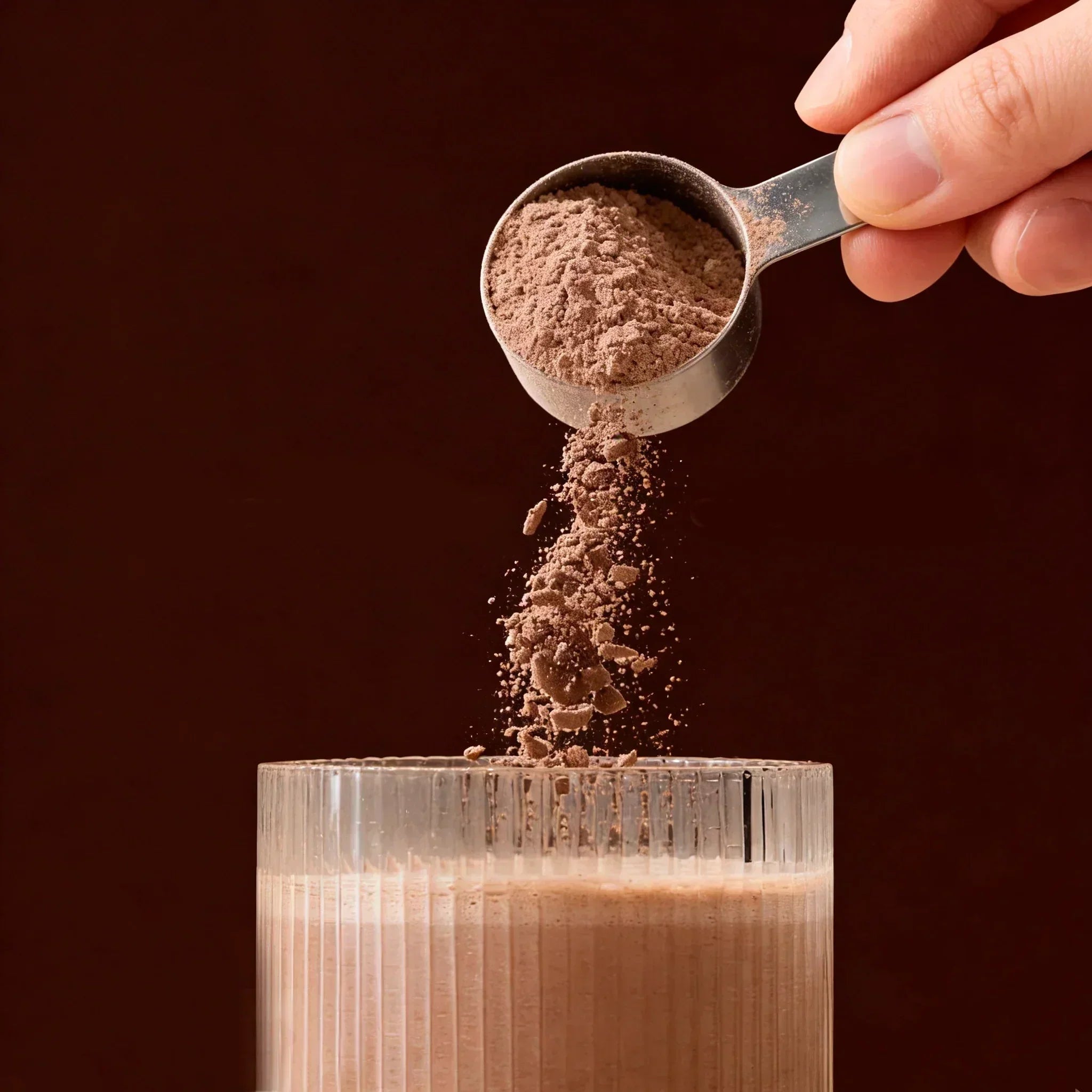


The protein powder has been on the market for decades. And it has been surrounded by confusion all that time. Whey concentrate, isolate, hydrolyzed, casein, vegan, beef, egg, clinical hydrolyzed, proprietary blends. Each container promises something different and most contradict each other.
If you want to finally understand what it’s for, what types there are, and which makes sense for you, this guide is designed to save you 20 hours of forums, videos, and sponsored reviews.
| Appearance | What you need to know |
|---|---|
| What it is | Protein concentrate obtained from milk, legumes, egg, or meat, dried into powder |
| What it’s for | Reach the daily protein goal (1.6-2.2 g/kg) when you don’t get enough from food |
| Main types | Whey concentrate, whey isolate, hydrolyzed, casein, vegan, egg, beef |
| Typical dose per serving | 20-30 g of protein (not powder) |
| When to take it | Post-workout, morning, or before bed — what matters is the total for the day |
| Do I need it? | Only if you don’t reach your daily protein with real food |
Which protein powder suits you?
4 questions and we tell you the type (and when to take it)
What protein powder is and what it’s for
Protein powder is dehydrated food. Nothing more exotic than that. It starts from a real source — whey, pea, rice, egg white, beef — the protein fraction is isolated and spray-dried. The result is a soluble powder that provides between 70% and 95% protein per gram, depending on the filtration grade.
Its function is to complement the diet. If you regularly train strength, your body needs between 1.6 and 2.2 grams of protein per kilogram of body weight per day to repair muscle tissue and build new mass. For a 75 kg person, that’s 120-165 g daily. Reaching that number with real food is perfectly possible — but not always convenient. That’s where powder comes in: it provides 25 g of protein in 30 seconds, no cooking, no chewing, and no excessive fullness.
Where protein powder really comes from
The four main sources on the market and where each one comes from:
- Whey (milk serum): a byproduct of cheese making. The liquid whey is filtered, lactose and fat are removed depending on the grade, and then it is dried. It is the most studied source and has the best amino acid profile for muscle.
- Casein: the other milk protein, the one that coagulates when curdling. Digests much more slowly than whey.
- Vegetables: pea, rice, soy, hemp. The protein fraction is extracted from the legume or cereal through filtration.
- Other animal sources: egg (dehydrated egg white) and beef (protein extracted from bovine muscle, mainly collagen and meat).
The process is industrial but not obscure. Filtration, drying, and packaging. What differentiates a good protein from a bad one is not a miracle ingredient — it’s the degree of filtration, the purity of the final powder, and the fillers added afterward.
Why powder is not magic
A truth the industry marketing tends to hide: a protein shake does not build muscle. What builds muscle is strength training with progressive overload and eating enough protein throughout the day. Powder is a logistical tool that helps you reach that number when you can’t with real food. If you get enough from chicken, eggs, dairy, and legumes, powder is optional. Useful, convenient, but optional.
This is important to say from the start because it shapes how you choose a protein: you’re not looking for a magic product, you’re looking for the most convenient and clean tool to add between 20 and 60 g of protein per day to what you already eat.
The 7 main types of protein powder
Each type has a distinct profile. The real difference between them is not in the marketing on the container — it’s in the protein percentage, absorption speed, lactose presence, and amino acid profile.
| Type | % protein | Speed | Lactose | Overall flavor |
|---|---|---|---|---|
| Whey concentrate | 70-80% | Fast | Yes | Mild, dairy |
| Whey isolate | 90-95% | Faster | Minimal | More neutral |
| Hydrolyzed whey | 90-95% | Very fast | Minimal | Somewhat bitter |
| Casein | 80-90% | Slow (6-8 h) | Variable | Creamy, thick |
| Vegan (pea/rice) | 75-85% | Medium | Zero | More earthy |
| Egg white | 80-90% | Medium | Zero | Neutral, peculiar |
| Beef | 75-85% | Medium | Zero | Stronger |
Whey concentrate
The most basic form of whey protein. Standard filtration, 70-80% protein per gram. The rest is fat, carbohydrates, and residual lactose. It is the most economical option and works perfectly if you tolerate dairy without problems.
For someone who trains at the gym and has no digestive issues with milk, whey concentrate is honest and sufficient. The premium supplement industry has been pushing for more expensive forms for years, but the gram-for-gram protein evidence is clear: concentrate works.
Whey isolate
Whey that has undergone an additional process — microfiltration or ion exchange — to remove almost all fat, carbohydrates, and lactose. The result: a powder with 90-95% pure protein per gram and virtually zero lactose.
It is the option for those who are lactose intolerant, seek a "cleaner" calorie profile, or simply do not want the extra fats and carbohydrates of concentrate. The price difference compared to concentrate is usually 20-40%.
If you’re unsure between concentrate and isolate, the specific decision with purity, price, and digestibility tables is covered in detail at whey protein vs isolate: which to choose according to your goal. Here we stick to the general overview.
Hydrolyzed whey
Whey isolate subjected to one more step: partial enzymatic hydrolysis. Proteins are broken down into shorter peptides before packaging. The idea is that the body absorbs the powder faster since it is partially “predigested.”
In practice, the absorption difference between isolate and hydrolyzed is minimal and does not translate into measurable benefits for most people. What it does translate into is a more bitter taste and a price 30% to 60% higher. It makes sense in very specific clinical contexts—post-surgery recovery, severe digestive problems—not as a gym choice.
Casein
The other milk protein. What differentiates it from whey is the digestion speed: while whey raises amino acids in the blood for 1-2 hours, casein forms a clot in the stomach that digests steadily over 6-8 hours.
That makes it especially interesting before sleeping or between long meals. It’s neither better nor worse than whey, just different: one releases quickly, the other releases slowly.
Vegan protein
The option for those who do not consume dairy for dietary or ethical reasons. The two plant sources with the best profile are pea (high in lysine, BCAAs) and rice (high in methionine). Combined, their amino acid profile approaches that of whey. Soy also works but contains phytoestrogens that some prefer to avoid.
The classic weak point of plant proteins is leucine—the amino acid that activates muscle synthesis. A quality vegan protein must provide at least 2 g of leucine per serving. If it doesn’t, the dose is compensated by increasing it to 35-40 g per shake.
Egg white protein
Dehydrated egg white. Excellent amino acid profile, lactose-free, medium digestion. It works perfectly and is one of the oldest on the market. Two drawbacks: the taste is hard to mask and the price is usually similar to a good isolate. That’s why it has been sidelined—not due to inferiority, but because of marketing.
Beef protein (veal)
Powder extracted from bovine muscle and connective tissue. Marketing sells it as "more anabolic than whey." The reality: most beef proteins on the market are high in collagen and low in essential amino acids, making them inferior to whey gram for gram in terms of muscle synthesis.
It has its niche among people with lactose intolerance who also cannot tolerate plant-based options, but as a general choice, it has no real advantage over whey isolate.

How to choose your protein according to your goal
The right question isn’t “which is the best protein?” It’s “which is best for my case?” Five common scenarios and the specific answer for each.
If you want to gain muscle mass
Whey concentrate or whey isolate. Period. Both have the best amino acid profile to activate muscle protein synthesis and are the most studied. Between them: concentrate if you tolerate lactose well and want to save money; isolate if you want the cleanest powder. Hydrolyzed and beef don’t offer real advantages here.
If you want definition or control calories
Whey isolate. More grams of protein per calorie, minimal fat, minimal carbs. Each shake gives you 25-27 g of protein and barely 110 kcal. In a controlled calorie deficit, that “clean” macro profile makes a difference.
If you have lactose intolerance
Whey isolate (usually well tolerated due to low residual lactose) or vegan pea+rice. Concentrate is out. If isolate still causes issues, quality vegan is a solid alternative.
If you are vegan or vegetarian
Combination of pea and rice, or a plant blend with added leucine. Make sure the dose provides at least 2 g of leucine; if not, increase it to 35-40 g per serving. Soy works but only if you’re comfortable with its phytoestrogens.
If you already reach your daily protein with real food
You don’t need it. It’s important to say. If your normal day includes chicken, eggs, fish, dairy, legumes and you reach your 1.6-2.2 g/kg of body weight effortlessly, protein powder won’t give you any extra benefit. Supplements are supplements. They complement, not replace. Powder is a logistics tool — convenience, speed, calorie control — not a product that adds something food doesn’t provide.
How much protein powder to take per day
The question has two parts that are often confused: how much total protein per day, and how much protein powder within that total.
The evidence-based range: 1.6 to 2.2 g per kilo of body weight
The International Society of Sports Nutrition and major meta-analyses on protein synthesis agree on this range for people who regularly train strength. Below 1.6 g/kg, muscle synthesis falls short. Above 2.2 g/kg, extra benefits are minimal for most.
For a 70 kg person who trains three to five times a week: 112-154 g of protein per day. Typical distribution: four or five meals, 25-40 g of protein each.
If you want to calculate your exact number based on your weight, phase, and activity level, everything is broken down at how much protein to take per day.
Protein powder as a tool, not a base
What matters is the total protein for the day. Powder covers what you don’t get from food. If you eat 100 g of protein from real meals and need 130 g, two 25 g shakes fill the gap effortlessly. If you only need to cover 20 g, one is enough.
The practical rule: half or less of your total protein should come from powder. The rest, real food. Three reasons: food also provides micronutrients and fiber, is more satiating, and diversifies amino acid sources.
When to take protein powder
This is where most myths circulate. The simple, counterintuitive rule backed by evidence: the exact timing matters much less than it seems.
Post-workout: the anabolic window explained without myths
For years it was said you have 30 minutes after training to take protein or “the anabolic window closes.” That idea is outdated. Meta-analyses on protein timing show that muscle synthesis remains elevated between 24 and 48 hours after training, not 30 minutes.
That doesn’t mean having a post-workout shake isn’t a good idea — it’s a logical time because you’re usually hungry, the muscle is active, and you solve the first solid meal without cooking at 9 pm. But if one day you don’t get it right after training, you haven’t ruined anything. What counts is the total for the day and the distribution between meals.
In the morning
It makes sense if you train fasted or if your usual breakfast is low in protein (toast, fruit, coffee). A shake with 25 g of protein quickly raises blood amino acids and prepares you for the day without needing to cook at 7 am.
Before bed: the real role of nighttime casein
Here’s a fact worth noting. If you train in the afternoon and have a relatively low-protein dinner, a casein intake before bed increases overnight protein synthesis by 20-22% according to available data. It does this because casein forms a clot in the stomach that releases amino acids steadily over the 7-8 hours you sleep.
It's not magic or a trick — it's the physiology of a slow-digesting protein. 30-40 g of casein one hour before sleep, in people who regularly do strength training, measurably improves overnight muscle recovery. If you train in the morning or have a protein-rich dinner (meat, fish), the effect is smaller.
Does the timing or the daily total matter?
The total daily amount and distribution every 3-5 hours. If you eat protein at breakfast, lunch, snack, and dinner, blood amino acids never drop too low. That’s more relevant than hitting the shake at an exact window.
Practical summary: spread your protein intake over four or five servings, and use powder to fill the gaps where you don’t reach your needs with real food.
The 4 most repeated myths (with evidence, not denial)
“Protein powder is a steroid”
No. Protein powder is dehydrated food. Steroids are synthetic hormones that alter endogenous testosterone production. Biochemically, they have nothing to do with each other. The myth exists because both circulate in the same cultural environment — gyms, bodybuilding — but confusing them is like confusing sugar with cocaine because both are white powders.
“It damages the kidneys”
In people with pre-existing kidney disease, protein should indeed be limited — that’s true. In healthy people, the evidence is clear: even doses of 4.4 g per kilo of body weight per day for a full year have shown no adverse effects on kidney function. That’s more than double the usual maximum dose. If your kidneys work well, having 1-2 shakes a day is far from any risk threshold.
The myth comes from a bad extrapolation: someone with an already damaged kidney reacts poorly to excess protein, so it’s assumed everyone would. The extrapolation is not supported by data.
“It makes you gain weight”
Protein powder provides calories like any food. A 30 g whey isolate shake is about 110-120 kcal. If you add them to a diet where you already meet your calorie needs, you add calories and, over time, gain weight. If you add them to a plan where they replace other calories of lower nutritional quality (cookies, sugary snacks), they don’t cause weight gain.
Powder doesn’t make you gain more weight than any other food. Gaining or losing weight depends on total calorie balance, not a specific supplement.
“It’s only for the gym”
No. Protein powder makes sense for anyone who doesn’t meet their daily protein requirements through food — regardless of whether they train at the gym or not. Older adults with sarcopenia, endurance athletes, women in peri-menopause, people with low appetite, those with little time to cook. All legitimate cases.
The “gym powder” stereotype comes from marketing — ads always show people with low fat and lots of veins. But the purpose of the powder is nutritional, not aesthetic.
What to look for in a protein powder before buying it
Four important things that most people don’t look at. If you keep this in mind, you’ll already filter out 80% of the market.
The % of protein per serving (not per container)
A simple fact the container almost always hides: how many grams of protein a serving provides. A good isolate gives 24-28 g of protein per 30 g of powder (80-93% purity per serving). An honest concentrate gives 20-22 g per 30 g of powder. If the number drops below 18 g, the powder has too much filler.
Leucine as a threshold for muscle activation
Leucine is the amino acid that activates the protein synthesis machinery (mTOR). Below 2 g of leucine per serving, activation is suboptimal. A quality whey protein provides between 2.5 and 3 g of leucine per dose. For vegan proteins, you have to check carefully: if they don’t reach 2 g, the dose needs to be increased.
Extra ingredients: what they add and what’s filler
It provides: natural emulsifiers (sunflower lecithin), digestive enzymes in small doses, nothing more.
It’s filler: aspartame, acesulfame K, added maltodextrin, colorants, “proprietary blends” without breakdown, BCAAs artificially added to inflate apparent protein content. If the container boasts 30 g of protein and half are free amino acids added at the end, that’s not functional protein, it’s marketing.
Why the filtration process matters (CFM)
CFM (Cross-Flow Microfiltration) is a membrane filtration process that keeps the protein at low temperature, without acid treatment or aggressive ion exchange. It preserves intact protein fractions (alpha-lactalbumin, beta-lactoglobulin, lactoferrin, immunoglobulins) which provide the complete amino acid profile and immune properties of the original whey.
A CFM-filtered isolate protein retains its nutritional value better than one processed by ion exchange — more expensive to produce but superior in quality. If the container doesn’t mention the filtration method, it’s most likely standard ion exchange.
Frequently Asked Questions
No. Men and women have the same relative protein requirements per kilogram of body weight (1.6-2.2 g/kg). Women who do strength training need exactly the same range, and protein powder works the same for them. Historical marketing has targeted men more, but the product is nutritionally neutral.
Yes, if you need to meet your daily requirements and can't do so with food. The minimum requirement for the general population (0.8 g/kg) is lower than for athletes, but older adults, people with low appetite, or those recovering post-surgery can benefit from powder even if they don’t train.
As many as you need to reach your total protein intake, but no more than half of the total. A reasonable amount is usually 1-2 per day. If you need 3 to reach your goal, reconsider your meals: you are probably covering too little with solid foods.
No. A protein is 70-95% protein. A gainer (mass gainer) has 20-35% protein and the rest are carbs and fats to add calories. A gainer is not concentrated protein — it’s powdered food for people who have trouble gaining weight.
There is no evidence that taking protein continuously has negative effects on healthy people. You don’t need to “cycle” protein like a drug — it’s food.
Whey concentrate, in predisposed people, can worsen acne due to its effect on insulin and androgens (via IGF-1). Isolate usually causes fewer problems. If you notice clear breakouts when starting, try isolate or switch to vegan or egg protein.
With equal leucine per serving, no. The problem is that vegan proteins usually have less leucine per gram, so you need to increase the dose (35-40 g vs 25-30 g of whey). If you adjust the dose or use a vegan enriched with leucine, the results are comparable.
Yes. A sealed protein lasts 1-2 years. Once opened, 6-8 months if kept in a dry, cool place. If it smells rancid or clumps, discard it.
If you decide to add protein powder to your routine
Review the four purchase keys: % protein per serving, leucine per dose, clean ingredients, and filtration process. If a protein meets all four, you're good. If it fails any, you're likely paying more for marketing than content.
The Proteinn by Wellbeinn is CFM-processed whey isolate, with 89% protein per serving, 2.8 g of leucine per dose, made in Spain, and without aspartame, acesulfame K, or added maltodextrin. Three flavors, 1 kg format.
If you're unsure between concentrate and isolate, the specific decision with purity, lactose, and price tables is in whey protein vs isolate. And if you want to know exactly how many grams per day you need based on your weight, it's all in how much protein to take per day.
If you regularly train strength, combining protein with creatine monohydrate is the most evidence-backed stack there is. Simple, cheap, and effective.
Redacción y revisión del artículo
Share:
How to identify the best creatine on the market in 30 seconds by looking at the container
Types of magnesium and what each one is for: the honest guide to choosing the right one