


You get up and your knees creak going down the stairs. Or you look in the mirror and your skin no longer bounces back like before. Someone told you to take collagen, you go looking for it and find a hundred different jars: marine, bovine, powder, capsules, liquid, with twenty added ingredients. Prices from 12 euros to 60. And no clear idea of what differentiates one from another.
Let’s explain. The short answer: hydrolyzed collagen works, especially for joints and skin, but with two conditions that almost no one meets. Sufficient dose and two or three months of consistency. The rest (exact timing, flavor, whether it’s marine or bovine) matters much less than you’ve been told.
| What for | Daily dose | When it’s noticeable |
|---|---|---|
| Joints and cartilage | 5-10 g of hydrolyzed peptides | 8-12 weeks |
| Skin, elasticity, and hydration | 2.5-10 g of hydrolyzed peptides | 8-12 weeks |
| Tendons and ligaments | 5-15 g + strength training | 3-6 months |
| General maintenance | 5 g per day | Cumulative effect |
How much collagen is right for you?
According to your age and what you want to achieve.
What collagen is and why it’s lost with age
Collagen is one third of all the proteins in your body. It’s in your skin, in the cartilage of your knees, in tendons, ligaments, bones, and even in the walls of your arteries.
The problem is that your body starts producing less from ages 25-30. About 1% less each year, more or less. One year you don’t notice. Twenty, yes. At 50 you’ve been producing less than you use for two decades, and that’s what you’re noticing in your knees and in the mirror.
In women, there’s an extra factor: menopause. Estrogens directly participate in collagen synthesis, so when they drop, production drops with them. It’s not gradual like before, it’s a step down.
Is it good to take collagen? What the evidence says
Yes. The collagen you take does not travel intact to your skin nor does it stick to your knees. That’s not how digestion works.
What really happens is more interesting. Hydrolyzed collagen is already broken into small pieces (peptides), and those pieces are absorbed. Some reach the bloodstream whole. There, they do two things. They provide the specific building blocks your body needs to make new collagen, and they act as a signal that wakes up the cells that produce it (fibroblasts in the skin, chondrocytes in cartilage) to work harder.
| Use | Level of evidence | What studies show |
|---|---|---|
| Joint discomfort | Solid | Less pain and better joint function with continued use |
| Skin elasticity and hydration | Solid | Measurable improvements in elasticity and dermal density |
| Fine wrinkles | Moderate | Modest but real reduction with dose and consistency |
| Tendons and ligaments | Moderate / developing | Better adaptation combined with strength exercise |
| Bone density | Promising preliminary | Favorable results in postmenopausal women |
| Nails and hair | Weak | Limited data, mostly self-reported |
Collagen powder, capsules, or liquid: which format to choose
The format doesn’t change what collagen does. It changes whether you’ll keep taking it in March. And since this is about taking it every day for months, that’s what ends up deciding.
Collagen powder wins for a very simple reason: you need between 5 and 10 grams a day. That’s between 10 and 20 capsules. No one takes 15 capsules a day for three months. With powder, it’s just a spoonful in your coffee, and that’s it. Plus, it’s much cheaper per dose.
Capsules are good for travel, but most have doses so small you fall well below what has been studied. Liquid is convenient and easy to take, but you’re paying to transport water to your home, and many contain extra sugars or sweeteners.
How to take collagen? Keep it simple
Good news: Hydrolyzed collagen is one of the easiest supplements to take. How to take collagen boils down to this:
- In any liquid: water, juice, coffee, tea, shake, yogurt. It dissolves and doesn’t form gelatin.
- Cold or hot doesn’t matter: it withstands heat without losing effectiveness, so coffee is fine.
- With or without food: no fasting or rituals needed. Take it whenever you won’t forget.
- With vitamin C: here there is a real reason, and I explain it below.
- Every day: at least eight weeks before judging if it works for you.
When to take collagen? And when is best
This is the question we get most often, and the answer will disappoint anyone looking for a ritual. When to take collagen matters much less than taking it every day. Peptides take hours to circulate and the effect builds up over weeks. There is no magic hour.
Now, if you want to be precise, there are times with reasons:
| Timing | Argument in favor | Is it worth it? |
|---|---|---|
| In the morning on an empty stomach | Digestion without competition from other proteins | Convenient, but no proven advantage |
| 30-60 min before training | Peptides match the mechanical stimulus in tendons | Yes, if your goal is tendons or ligaments |
| After training | Taken with the shake, easy to remember | Very practical |
| Before sleeping | Tissue repair is more active at night | Plausible, limited evidence |
And if you ask me when is the best time to take collagen without more context, I’ll tell you the truth: whenever it’s impossible for you to forget it. If you have a coffee every morning without fail, add it to your coffee. If you always train at the same time, take it with your shake. The best time is the one you can keep up for three months.
Collagen with vitamin C
Almost all combinations sold in supplements are just an excuse to raise the price. The one with collagen with vitamin C is not. This one has a textbook biochemical reason.
To produce collagen, your body has to chemically modify two amino acids: proline and lysine. The enzymes that do this work (prolyl hydroxylase and lysyl hydroxylase) need vitamin C to function. Without vitamin C, they don’t work halfway: they don’t work at all.
This explains scurvy, by the way. Sailors who went months without fresh fruit lost teeth, had bleeding gums, and wounds wouldn’t heal. All of that was collagen the body couldn’t produce due to lack of vitamin C.
So taking peptides without ensuring vitamin C is like bringing bricks to the site but leaving the builders without tools. No need to obsess: if you eat fruits and vegetables, you’re covered. But make sure it’s covered, either by the supplement or your plate.
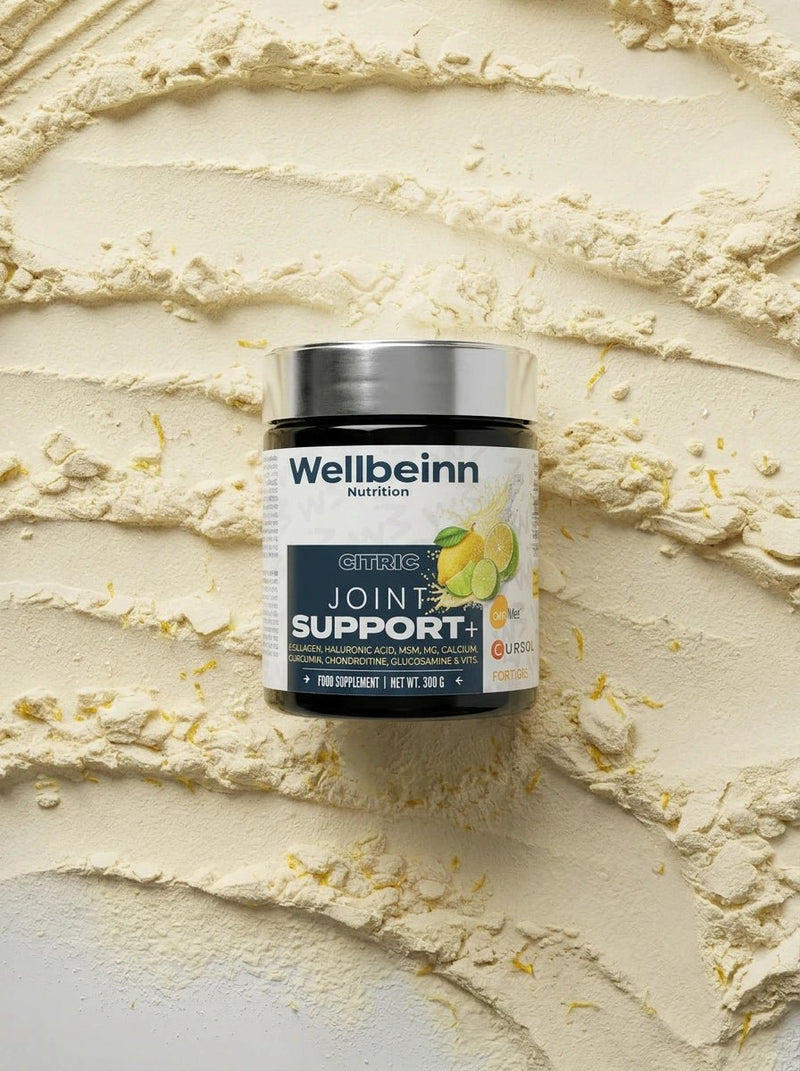
Joint Support+ · Advanced Joint Collagen
With Fortigel® and Ovomet®, two ingredients with their own studies on joint health. Powder, 300 g, lemon flavor. To reach the effective dose without swallowing fifteen capsules.
View productWhat is the best collagen for women aged 50
At 50, the situation is different. Many women describe it the same way. Everything comes together all at once. Thinner, drier skin, knees or hands that didn’t bother before, and a general feeling that the body no longer recovers on its own.
It’s not imagination. With the drop in estrogen, collagen synthesis plummets quickly, affecting skin, joints, and bones all at once. That’s why at this age collagen goes from "would be nice" to making a lot of sense.
About the best collagen for women aged 50: there’s no miracle bottle, but there are criteria to avoid mistakes.
- Hydrolyzed and in powder form. To reach 5-10 g daily without swallowing fifteen capsules.
- Peptides with their own studies. Patented and standardized ingredients are the ones used in published trials. Generic "collagen" is not the same.
- The grams on the label. If it says "exclusive complex" without numbers, skip it.
- Vitamin C covered, either through the product or your diet.
- A flavor you can handle every day. It sounds silly, but it’s what decides if you’re still taking it in March or if it’s at the back of the cupboard.
And this isn’t said enough: at 50, collagen works much better if you do strength training. Mechanical stimulus is what tells your body where to use that material.
How long does it take to notice effects and how long should you take it?
The data is quite consistent: effects start to be noticeable after 8 weeks, and the best results come between 3 and 6 months. Sometimes earlier for joints; later for skin and tendons.
This is exactly where people quit. They buy the bottle, take it for three weeks, see nothing, and conclude collagen is a scam. With three weeks, you wouldn’t notice anything even with the best product on the market. It’s like joining a gym, going five times, and saying it doesn’t work.
Do you have to take it forever? It’s not mandatory, but understand the logic: collagen doesn’t fix anything permanently. It provides material and stimulus while you take it. If you stop, your production returns to its normal rate, which declines with age. Some take it continuously like vitamin D, others do several-month cycles. Both approaches are reasonable.
Frequently asked questions
It works, especially for joint discomfort and skin elasticity and hydration. But at sufficient doses (5-10 g daily of hydrolyzed peptides) and with at least 8-12 weeks of consistency. The smoke isn’t in the collagen, it’s in the exaggerated promises and products with token doses.
It hardly matters: the effect accumulates over weeks, not from a single peak. Choose the time when you won’t forget it. The only solid exception: if you’re targeting tendons or ligaments, take it 30-60 minutes before strength training.
Dissolved in whatever you want: water, juice, coffee, tea, smoothie, or yogurt. It’s soluble and heat-stable, so coffee is fine. No fasting or special conditions needed. Stir and you’re good to go.
Between 5 and 10 grams of hydrolyzed collagen for joints, and between 2.5 and 10 grams for skin. For tendons and ligaments, up to 15 grams combined with exercise have been used. Below 2.5 g per day, don’t expect to notice anything.
Because the enzymes your body uses to produce collagen (prolyl and lysyl hydroxylase) need vitamin C to function. Without it, they don’t work. Providing peptides without supplying vitamin C is leaving the job half done. This isn’t a marketing strategy: it’s textbook biochemistry.
The one that meets this: hydrolyzed powder (to reach the dose without fifteen capsules), with peptides that have their own studies, clear grams on the label, vitamin C included, and a flavor you can take every day for months. And above all: combined with strength training, which multiplies its effect on bone, muscle, and joints.
After 8 weeks you start to notice it, and the good effects come between 3 and 6 months of continuous use. In joints it may be a bit faster; in skin and tendons, slower. Judging it at three weeks is the most common mistake.
Powder, for pure logistics: you need 5-10 grams daily, which is 10-20 capsules a day. Also, it’s cheaper per dose. Capsules are good for travel but almost always fall short on dose, and with liquid you pay a lot for the water you carry.
Very few. The most common are mild digestive discomforts (heaviness, some bloating) that can be fixed by spreading the dose or taking it with food. Watch the source if you have allergies: there is bovine, marine, and egg-derived collagen. If you’re allergic to fish, shellfish, or eggs, read the label before buying.
Yes, that’s the key. The effect builds up over weeks. Missing a dose here and there doesn’t ruin anything, but taking it three times a week doesn’t reproduce what studies show, which use daily regimens.
The evidence is stronger for elasticity and hydration than for wrinkles, where the effect exists but is modest. It helps gradually, does not replace medical treatment, and is not visible in two weeks. Expect better quality skin, not a different face.
Yes, and it’s very good: add them to the same shake. They are different and complementary things. Protein (whey) provides the full amino acid profile for muscle; collagen provides specific peptides for connective tissue. They don’t overlap.
Bone broth and gelatin provide collagen, but in very variable amounts, impossible to quantify and not hydrolyzed. Eating well is the foundation, but reaching 5-10 grams of absorbable peptides daily from food alone is complicated.
Redacción y revisión del artículo
Share:
How much protein does an egg contain (table by size)
Contraindications for pressotherapy: when not to use it