
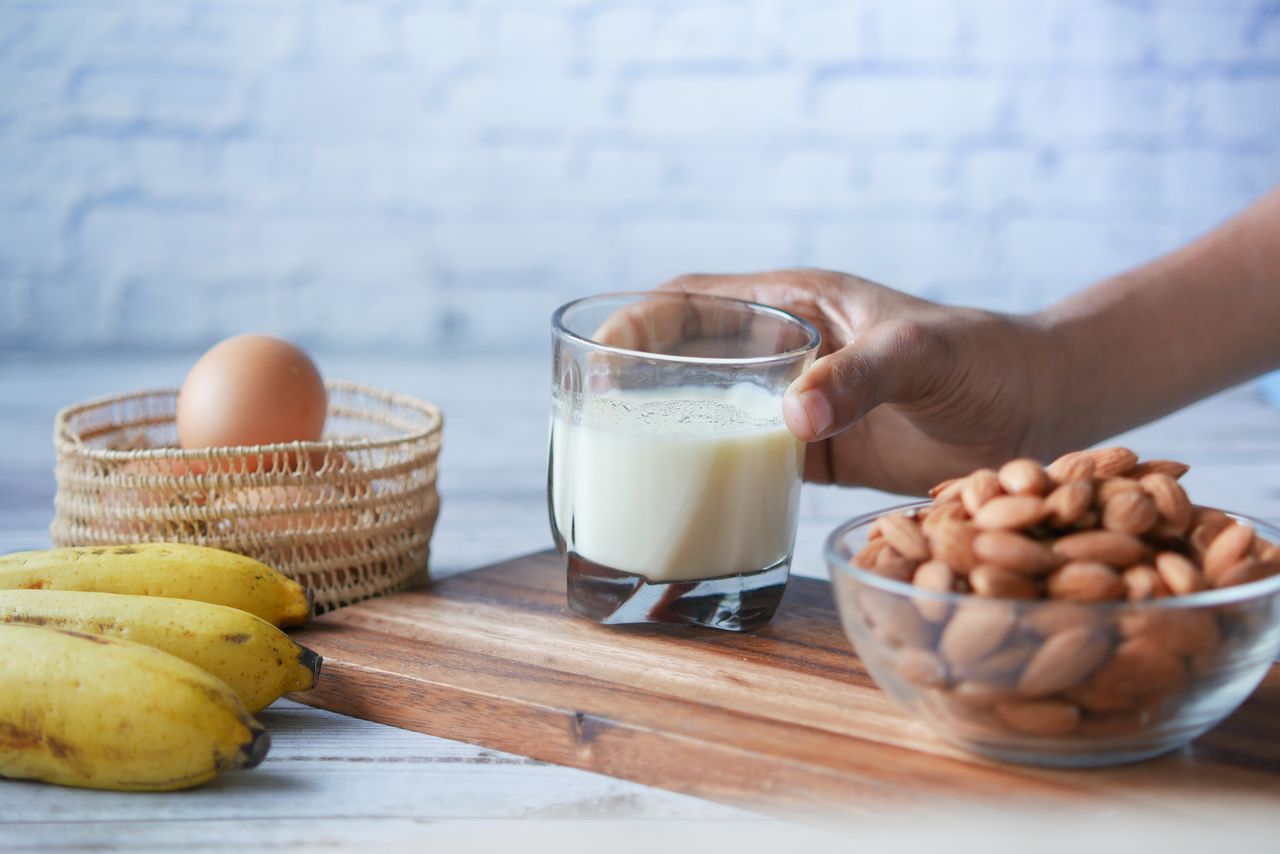


Every cell in your body contains protein. Your muscles, skin, nails, the enzymes that digest the food you just ate, the antibodies that stop a cold, the hormones that regulate sleep: all of this is partly made of protein. It’s not just another nutrient. It’s the building material with which the body builds and repairs itself every day.
And yet almost no one really knows how much they need, nor what it’s for beyond the cliché of "gaining muscle." In this guide, you will understand what protein is, what it does inside you, how much you need depending on your case, and where to get it without complications. With data, no hype.
| Aspect | What you need to know |
|---|---|
| What it is | A macronutrient made of amino acid chains; the material the body uses to build and repair tissues |
| What it’s for | Build and repair muscle, make enzymes and hormones, defend (antibodies), transport oxygen and nutrients, and satisfy hunger |
| How much you need | Sedentary 0.8-1 g/kg · active 1.2-1.6 g/kg · strength 1.6-2.2 g/kg · over 65 years 1.2-1.5 g/kg |
| Best sources | Egg, chicken, fish, dairy, beef; and vegetables like legumes, tofu, seitan, and soy |
| Ideal distribution | 4-5 meals with 25-40 g of protein each, not all at once |
| Key amino acid | Leucine activates muscle synthesis; about 2-3 g per meal is needed |
How much protein do you need per day?
Your weight, activity, and goal. We give you the range in grams.
What protein is (and what it’s made of)
Protein is one of the three macronutrients, along with carbohydrates and fats. But unlike the other two, its main job is not to give you energy: it is to build. Think of it as the body’s bricks, while carbs and fats are more like fuel.
Each protein is made up of chains of smaller pieces called amino acids. There are 20 different amino acids, and by combining them in different orders and lengths, the body builds everything from muscle fiber to hormones. It’s like an alphabet of 20 letters used to write millions of different words.
Of those 20, there are 9 called essential: your body cannot produce them, so they must come from food. The other 11 can be produced by the body itself. When a food provides the 9 essentials in good proportion, we say it has "complete" or high biological value protein. We will return to this when we talk about sources.
What protein is for in the body
Here is the heart of the matter. Protein is not just for biceps. It performs at least six different jobs, most of which happen without you noticing.
Build and repair muscle
This is the most well-known function, and for good reason. Every time you train, lift weights, or simply use a muscle, you create microtears in its fibers. The protein in your diet provides the amino acids to repair them and, with the right stimulus, make them a bit stronger than before. This rebuilding process is called muscle protein synthesis. If you don’t get enough protein, your body can’t repair well and recovery suffers. We explain it in detail in how muscle recovery works.
Make enzymes and hormones
Almost all chemical reactions in your body depend on enzymes, which are proteins. The one that breaks down starch from bread in your mouth, the one that digests fat, the one that copies your DNA: all proteins. Many hormones are proteins too, like insulin (which controls blood sugar) or growth hormone. Without enough protein raw material, these internal factories run at half capacity.
Defend yourself: the immune system
The antibodies that neutralize viruses and bacteria are proteins. When you have low protein for a while, your defense system loses ammunition and you get sick more easily. It’s no coincidence that during recovery and post-surgery, there is a strong emphasis on eating enough protein: the body needs it to repair and defend itself at the same time.
Transport oxygen and nutrients
Hemoglobin, which carries oxygen through the blood to every corner of the body, is a protein. Other proteins transport fats, vitamins, minerals, and medications through the bloodstream. They are the internal delivery trucks.
Satiate and help control weight
Of the three macronutrients, protein is the most satiating. It takes longer to digest and sends "I'm full" signals to the brain before carbohydrates do. That’s why a meal with a good dose of protein keeps you full for longer, and why increasing protein is one of the most effective ways to eat less without feeling deprived. It’s not magic for weight loss, but it really helps.
How much protein you need per day
This is where most people unknowingly fall short. The amount depends on your weight and, above all, what you demand from your body. The reference is given in grams of protein per kilogram of body weight per day.
| Profile | Protein per day | Example: 70 kg person |
|---|---|---|
| Sedentary | 0.8-1 g/kg | 56-70 g |
| Active / recreational sport | 1.2-1.6 g/kg | 84-112 g |
| Regular strength training | 1.6-2.2 g/kg | 112-154 g |
| Over 65 years old | 1.2-1.5 g/kg | 84-105 g |
The 0.8 g/kg shown in official tables is the minimum to avoid illness, not the optimal amount to stay strong. It’s the difference between "no deficiency" and "performing well." As soon as you train, move, or want to preserve muscle with age, that baseline is insufficient.
Why older adults need more
It sounds counterintuitive: if you move less, shouldn’t you eat less protein? Actually, no. After 60, the body responds less effectively to protein stimulation, so it needs a higher dose to activate the same muscle repair. Eating too little protein in old age accelerates muscle loss (called sarcopenia), which is a major cause of frailty and falls. Here, protein isn’t about aesthetics: it’s about autonomy.
Spread it throughout the day
Total amount matters, but distribution does too. The body can only use a limited amount of protein at once to build muscle, so spreading it over 4-5 meals of 25-40 g is much more effective than eating 100 g in a single dinner. Breakfast, lunch, snack, and dinner, each with its protein portion, is the simplest and most effective formula.
Signs you’re not getting enough protein
The body doesn’t alert you with an alarm, but it does give clues when you’ve been low for a short time:
- Constant hunger and cravings, especially for sweets, even if you eat a lot.
- Difficulty gaining muscle or, worse, losing it despite training.
- Slow recovery after training, with soreness that lasts too long.
- Weaker hair, breaking nails, dull skin.
- You get sick frequently (weakened immune system).
- Unexplained tiredness not due to lack of sleep.
None of these signs are exclusive to protein, but if several coincide and you do the math on what you eat, the culprit usually appears.
The best protein sources
Not all sources are equal, neither in quantity nor quality. This table gives you the grams of protein per 100 g of food so you have real references and stop estimating.
| Food (per 100 g) | Protein | Type |
|---|---|---|
| Chicken breast | ~31 g | Animal |
| Tuna (in water) | ~29 g | Animal |
| Lean beef | ~26 g | Animal |
| Salmon | ~22 g | Animal |
| Aged cheese | ~25 g | Animal |
| Lentils (cooked) | ~9 g | Plant-based |
| Chickpeas (cooked) | ~9 g | Plant-based |
| Tofu | ~12 g | Plant-based |
| Seitan | ~24 g | Plant-based |
| Egg (1 unit, ~60 g) | ~7 g | Animal |
| Plain Greek yogurt | ~9 g | Animal |
| Tempeh | ~19 g | Plant-based |
Animal sources
Meat, fish, eggs, and dairy have a big advantage: their protein is complete (it contains all 9 essential amino acids in good proportion) and the body utilizes it very well. They are also dense: with 150 g of chicken, you already get about 45 g of protein, almost half the daily portion for an active person.
Plant sources
Legumes, tofu, seitan, nuts, and grains also provide protein, but most are incomplete: they lack or are low in some essential amino acid. The solution is old and simple: combine. Legume with grain (lentils with rice, chickpeas with bread, hummus with pita) complement each other and provide protein as good as animal protein. Soy, tofu, and tempeh are the plant exception: their protein is already complete by default.
Protein quality: not all counts equally
Two foods with the same grams of protein are not necessarily equivalent. Here come three concepts that are good to understand without getting overwhelmed.
Biological value and essential amino acids
The biological value measures how much of the protein you eat is actually used for building, rather than being burned or eliminated. It mainly depends on whether all 9 essential amino acids are present and in what proportion. Egg is the classic reference for high biological value, along with whey, meat, and fish. Individual plant sources usually have a somewhat lower value, which can be fixed by combining them.
Leucine: the muscle switch
Of the 9 essentials, one deserves a special mention: leucine. It acts as a switch that turns on muscle synthesis. Below a certain dose per meal (around 2-3 g of leucine), the switch doesn’t fully activate. Animal sources and whey are rich in leucine; that’s why vegans may need to increase portions slightly to reach the same threshold. You don’t have to count leucine daily: just know that meals with 25-40 g of good protein cover it more than enough.

Proteinn 100% Whey Isolate
CFM whey isolate, up to 89% protein per serving, rich in leucine, no aspartame. To fill the gap on days when food isn’t enough. 3 flavors.
View productWhen powder supplements fit in
So far we have talked about real food protein, and that should always be the main source. But there are days when you don’t make it: you train at 9 p.m. and don’t feel like cooking, you travel, eat out, have little appetite in the morning, or simply your gram goal is high and food alone isn’t enough. That’s where protein powder supplements come in.
It’s not a magic product nor a substitute for food: it’s a logistics tool. One scoop provides 25-30 g of high-quality protein in thirty seconds, without cooking and with very few filler calories. The sensible rule is that most of your protein should come from real food and that the powder only fills the gap that’s missing.
If you want to dive deeper into the supplement itself (types, how to choose it, and how to take it), you can find everything in the protein powder guide: what it’s for and which to choose, and if you’re unsure between the two most common versions, in whey protein vs isolate. To calculate your exact gram amount, it’s broken down in how much protein to take per day.
Frequently Asked Questions
In people with pre-existing kidney disease, protein intake should be controlled under medical supervision. But in healthy people, there is no evidence that a high-protein diet harms the kidneys: even high intakes for months have not shown adverse effects in people with normal kidney function. If your kidneys are healthy, eating 1.6-2.2 g/kg is far from any risk.
Above 2.2-2.5 g/kg per day, in people who train, the extra benefits for muscle are minimal: the body simply uses what it needs and burns the rest as energy. It’s not dangerous for healthy people, but it is unnecessary and usually displaces other nutrients in the diet. More is not better beyond a certain point.
Both types work. Animal protein is complete by default and very easy to absorb; plant protein works just as well if you combine sources (legumes with cereals) or rely on soy, tofu, and seitan. The ideal for most people is a mix: it provides a variety of amino acids, fiber, and micronutrients. What matters is reaching the total with quality, not the source itself.
Not as much as was once thought. The famous 30-minute "anabolic window" is outdated: muscle synthesis remains elevated for 24-48 hours after training. Taking protein post-workout is a convenient and logical time, but what really matters is the total intake throughout the day and distributing it well. If you reach your target, it’s fine to eat two hours later.
Protein provides calories like any food (4 kcal per gram), so in excess it can add weight. But it is the macronutrient that contributes the least to weight gain in practice: it is very satiating, harder to convert into fat, and helps preserve muscle during a weight loss diet. In fact, increasing protein usually helps control weight, not the other way around.
Yes, perfectly. Powder is a convenience, not a necessity. With eggs, dairy, meat, fish, and legumes, you can easily reach almost any goal. The supplement only makes sense when your target is high or when, due to schedules or lack of appetite, you struggle to close the day with real food.
Not in relative terms. The requirement is measured per kilo of weight, so a woman and a man with the same weight and activity need the same grams per kilo. The total amount may be lower simply because the average weight is lower, but the range (1.6-2.2 g/kg for strength) is identical.
It's an old myth. The idea was that protein "acidifies" and forces calcium to be taken from the bones, but current studies show the opposite: adequate protein, along with enough calcium, protects bone mass, especially in older people. Protein is part of the bone matrix.
No. Eating protein at night does not make you gain more weight than during the day; what matters is the total calories of the day. In fact, a slow-digesting protein serving (like dairy or casein) before bed can promote nighttime muscle repair. The only thing to watch is that dinner isn't disproportionately high in total calories.
In summary
Protein is the material your body uses to build and repair itself: muscle, enzymes, hormones, defenses, and transport. It's not just a gym thing. Calculate your goal based on your case (from 0.8 g/kg if sedentary up to 2.2 g/kg if strength training), spread it over 4-5 meals of 25-40 g, and prioritize quality sources: eggs, fish, meat, dairy, and if you eat plant-based, combine legumes with cereals or use soy.
When real food doesn't get you to your target, the powder supplement is the easiest way to fill the gap without complications. Wellbeinn's Proteinn is CFM whey isolate, with up to 89% protein per serving and rich in leucine, designed just for that. No magic. It's pure biochemistry: you provide the bricks, the body builds.
Redacción y revisión del artículo
Share:
Side effects of magnesium: what happens when there is too much and how to avoid them
Whey Isolate Protein and What You Need to Know Before Buying It